Signs of Roof Damage: What Phoenix Homeowners Should Look For
Roofs in Phoenix almost never fail suddenly. They fail slowly, in the sun, for years — and then one monsoon storm turns a problem you could have fixed for a few hundred dollars into water running down a wall. Nearly every expensive roof repair we do started with a sign somebody saw and reasonably decided to keep an eye on.
This is the full list of what to look for, organized the way you would actually find it: what shows up inside your house, what shows up on the roof by roof type, what to check after a storm, and how to tell what is urgent from what can wait until fall.
Signs of roof damage you will notice inside the house
Interior signs are the ones people spot first, and they are always further along than they look. By the time water marks drywall, it has usually been traveling above the ceiling for a while.
- Ceiling or wall stains. A brown or yellow ring, often near a wall, a vent, or a skylight. Water travels along the deck before it drips, so the stain is rarely directly under the entry point.
- Bubbling, blistering, or peeling paint. Moisture behind the paint film. On a wall, look up — it is frequently a flashing failure where the roof meets that wall.
- Soft or sagging drywall. This is not an early sign. It means the material has been wet more than once.
- A musty smell in a closet, hallway, or laundry room. Especially in rooms under a low-slope section. Smell often precedes any visible stain.
- Daylight or pinholes visible in the attic. Any light coming through the deck is a hole that water can use.
- Damp insulation or water tracks on rafters. Worth a look with a flashlight after the first heavy rain of the season.
- Rising cooling bills. A wet or failing roof loses its insulating value, and a foam roof with a burned-off coating stops reflecting heat entirely.
If you are seeing active water, do not wait for good news. Start with roof leak repair, or if it is coming in during a storm, emergency roof leak repair.
Signs of roof damage on a foam roof
Spray foam is the most common flat-roof system in the Valley, and it gives clear warnings when it needs attention.
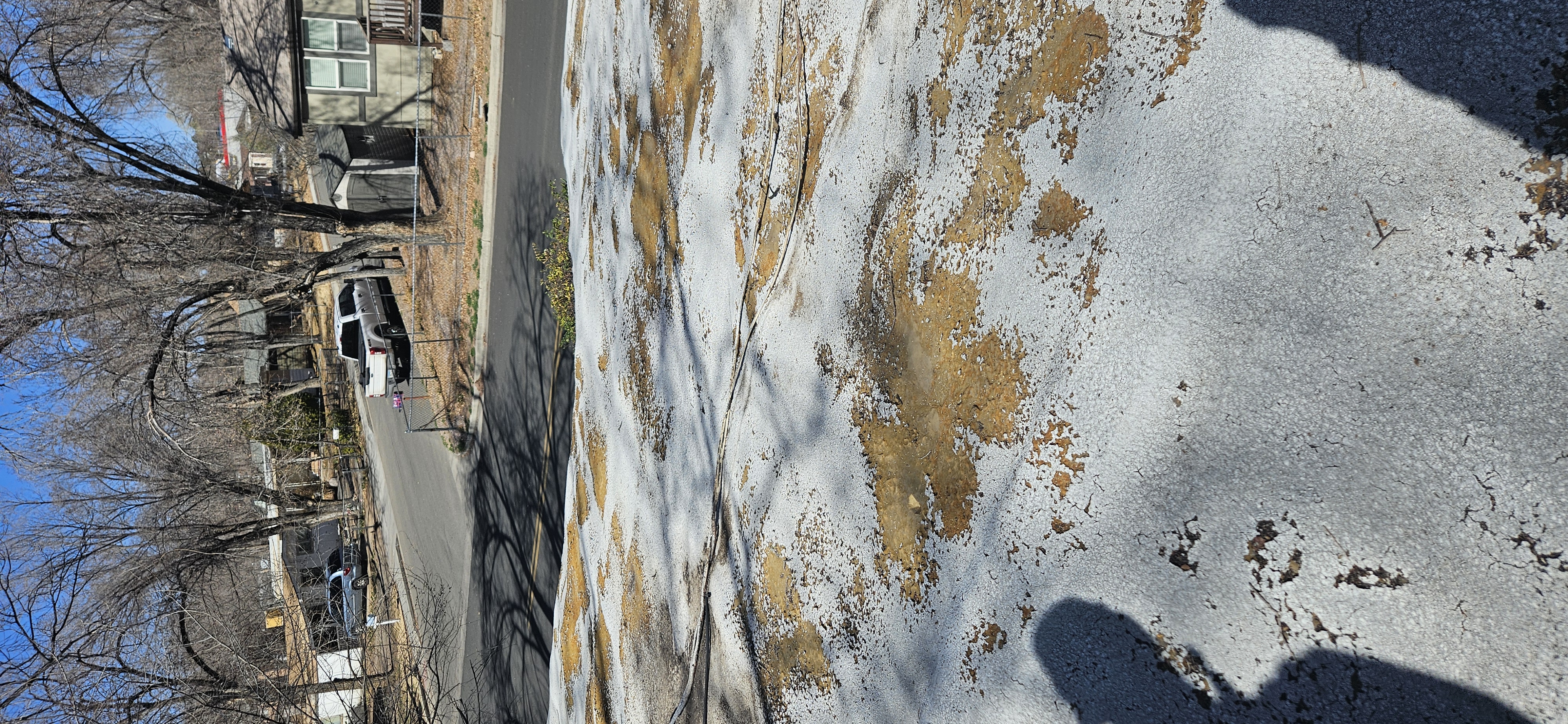
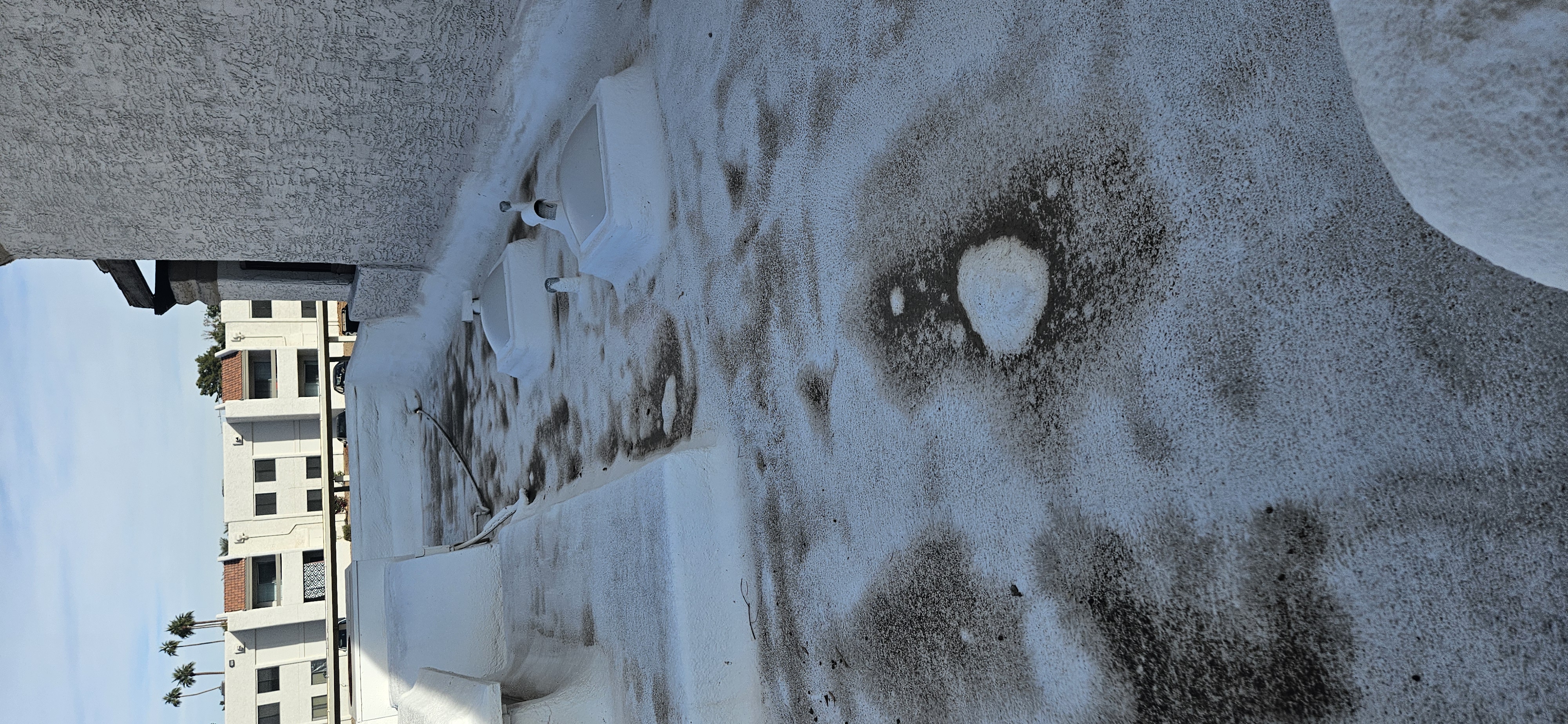
- The coating has gone chalky, thin, or gray. The reflective elastomeric topcoat is a sacrificial layer that Phoenix sun burns through in roughly five years. Chalking means it is due for a recoat — which is maintenance, not a new roof.
- Blisters or bubbles. Trapped air or moisture. Small and dry, they are a patch. Once water is under them, the affected foam has to be cut out and replaced.
- Bird pecks and pinholes. Birds genuinely peck foam roofs, and each hole is a direct path to the deck. Cheap to seal early.
- Cracking around penetrations and curbs. HVAC curbs, vent pipes, and parapet terminations move and crack before the open field does.
- Soft or spongy spots underfoot. Saturated foam. This is the sign that turns a small repair into a section replacement, so it is the one worth catching early. See foam roof repair.
- Standing water 48 hours after rain. Ponding wears out coating faster than anything else on the roof.
Signs of roof damage on a tile roof
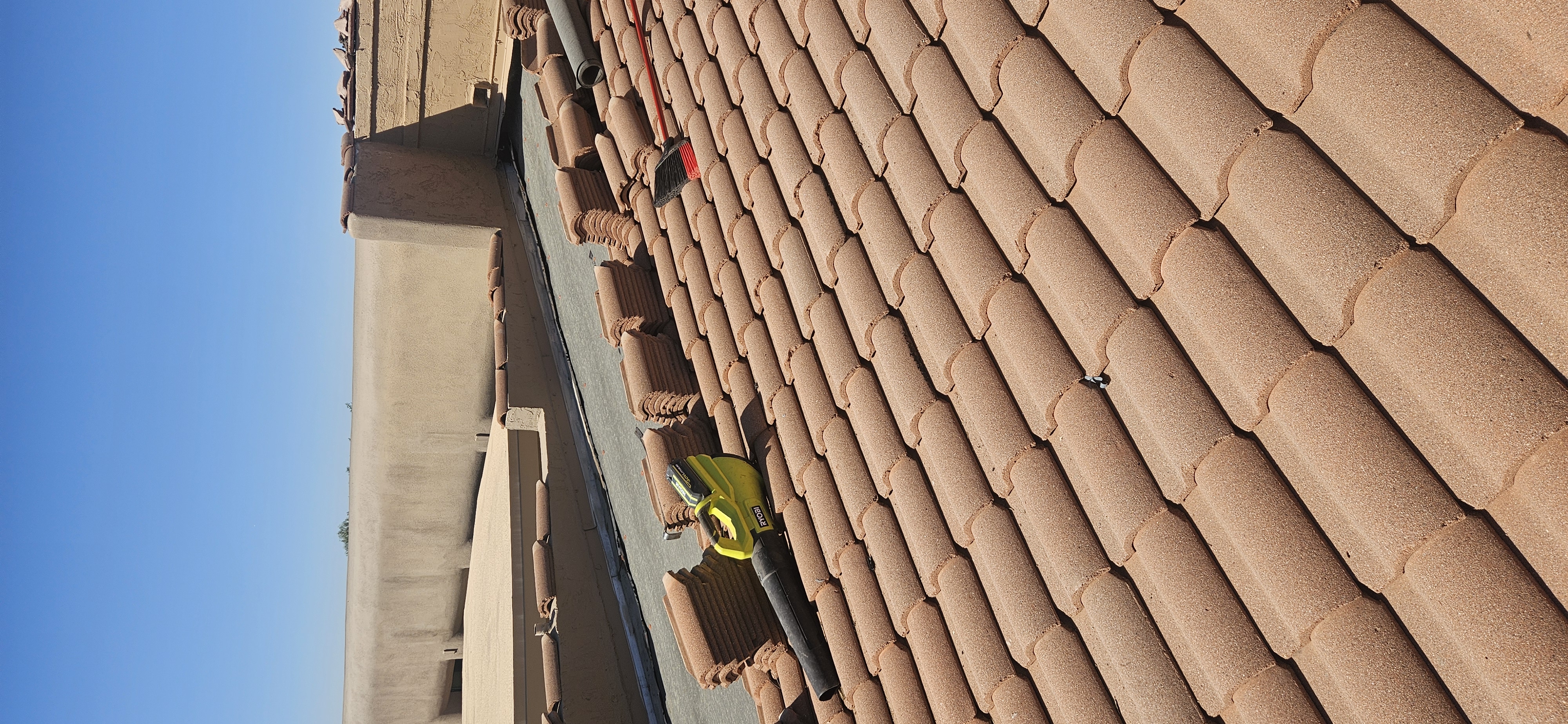
Tile roofs mislead people, because the part you can see is not the part that keeps water out. The underlayment beneath the tile is the waterproofing, and in Phoenix it typically reaches end of life at 20 to 25 years while the tile still looks perfect.
- Cracked, chipped, or broken tiles. Usually foot traffic from HVAC, satellite, or solar work. Every broken tile exposes underlayment to direct UV.
- Slipped or crooked tiles. Tiles walk downhill over decades. A gap in a course lets water move sideways instead of down.
- Debris packed in the valleys. Valleys carry the most water on the roof; when they clog, water backs up under the tile.
- Rust streaks or holes in valley metal. Old galvanized valleys rust through at the bottom, exactly where the water is.
- Cracked or missing ridge mortar and loose ridge caps. A wind hazard as well as a leak path.
- Leaks with no broken tile anywhere. The classic sign of failed underlayment. See tile roof repair.
Signs of roof damage on a shingle roof
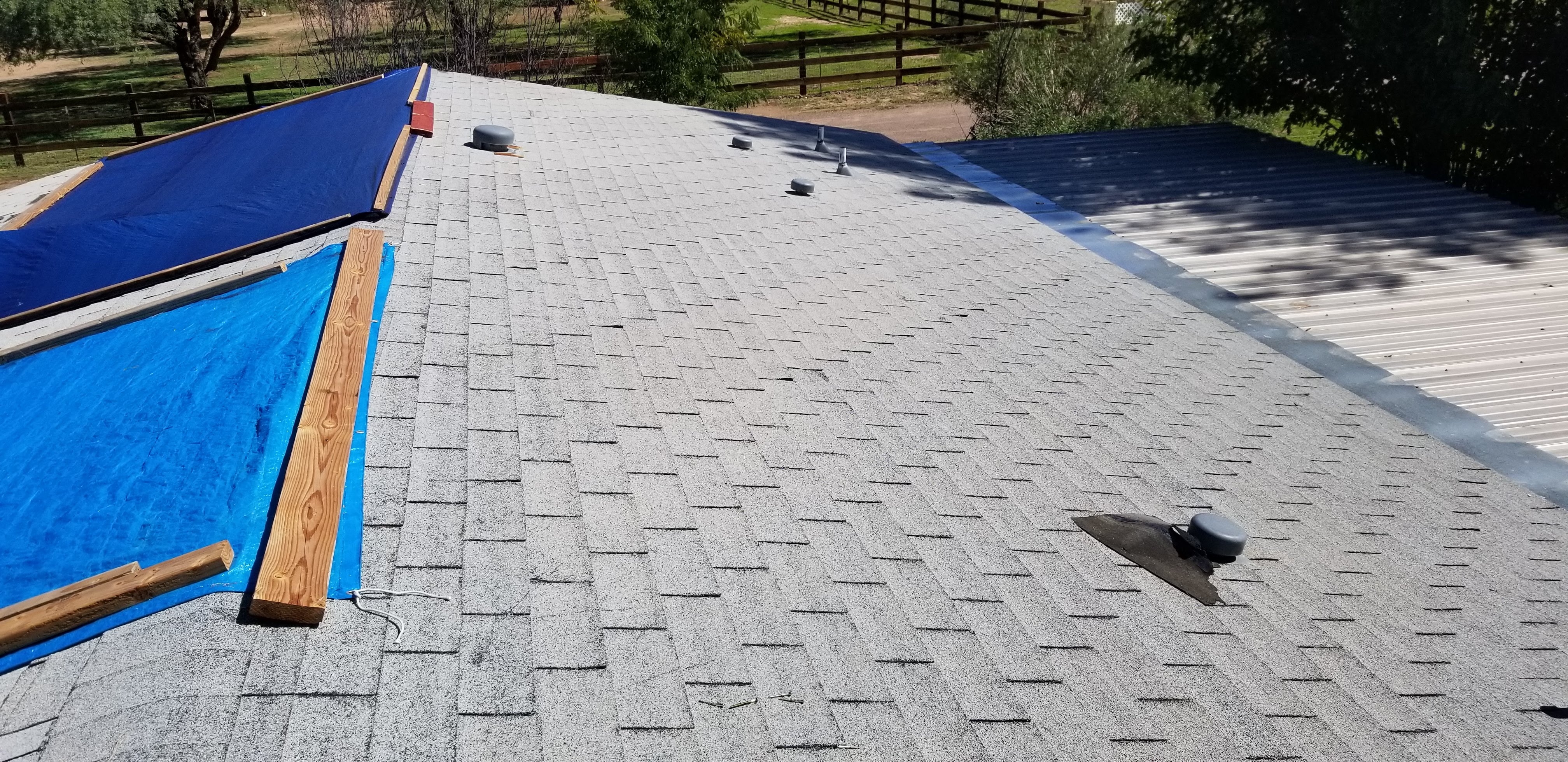
- Granules in the gutters or at downspouts. Granules are the shingle’s sunscreen. Losing them is the beginning of the end.
- Curling, cupping, or clawing edges. Heat aging. Phoenix does this faster than almost anywhere.
- Bald or shiny patches. Exposed asphalt that will crack within a season or two.
- Missing or lifted shingles. Common after a monsoon microburst.
- Exposed or backed-out nail heads. Each one is a pinhole leak with a rubber gasket that has long since dried out.
- Dark streaking around penetrations. Water is tracking there. See shingle roofing.
Signs of roof damage on a flat or low-slope roof
- Seams and laps lifting. On modified bitumen or TPO, the seams fail before the field does.
- Ponding water and clogged scuppers or drains. Water that cannot leave will eventually find a way in.
- Punctures near HVAC units. Service techs drop tools and drag conduit. Look around every unit.
- Layers of old patches. Stacked patchwork usually means nobody ever found the real source.
- Alligatoring or crazing of the surface. UV embrittlement of the membrane. See flat roof repair.
After a monsoon: the ten-minute storm checklist
Do this from the ground and from inside the house the morning after any significant wind, rain, or hail event.
- Walk the perimeter of the house and look for tile, shingles, or roofing debris on the ground.
- Look up at the ridge line for gaps, missing caps, or tiles out of alignment.
- Check for tree limbs that hit the roof, and for scrape marks where a limb dragged.
- Look at fascia, gutters, and downspouts for dents or separation.
- Check window and door frames for water intrusion at the top corners.
- Walk every room and scan ceilings, especially near exterior walls, vents, and skylights.
- Open the attic access and look for daylight or wet insulation.
- Check the A/C plenum area and around roof-mounted units for water.
- Photograph anything you find, with a wide shot and a close shot, the same day.
- Note the date of the storm. Insurance claims depend on tying damage to an event.
Hail and wind damage are frequently claimable. We document damage in a form adjusters can use — see storm and hail damage repair and monsoon roof inspections.
What you can safely check yourself — and what you should not
Everything on the storm checklist above is safe. Beyond that, please be careful. A meaningful share of the leak calls we get on tile roofs were created by someone walking on the tile to look for damage.
- Safe: ground-level inspection with binoculars or a zoom lens, gutter and downspout checks, attic inspection with a flashlight, interior ceiling and wall scan, photographing what you see.
- Not safe: walking a tile roof (tile is strong in the middle and breaks at the edges), walking foam that may be saturated, going up on any roof in July heat or when the surface is wet, and getting near roof-mounted electrical or A/C equipment.
- Not useful: caulking tiles, smearing tar over an unidentified stain, or applying a random sealant to foam. Incompatible products can prevent proper foam and coating adhesion later, which makes the eventual repair cost more.
Urgent versus can wait
Call today if you have active dripping inside, a sagging or spongy ceiling, water anywhere near electrical fixtures or the air handler, visible daylight through the deck, storm damage with the roof opened up, or a soft spot underfoot on a flat roof.
Schedule within a few weeks for old dry ceiling stains, chalky or thin foam coating, a handful of cracked tiles, granule loss, small blisters, and clogged valleys or scuppers. These are all inexpensive right now and all get expensive after a wet season.
Put on the calendar an annual inspection, a foam recoat check at the five-year mark, and an underlayment assessment on any tile roof past fifteen years.
What an inspection settles that a checklist cannot
A list like this tells you whether something is worth a call. It cannot tell you how much life your roof has left, whether that stain is current or from a leak fixed years ago, or whether you need a repair, a recoat, or a replacement — and those are the answers that decide what you spend.
Our roof inspection is free, we walk the roof rather than the driveway, you get photos of everything we find, and you get a written estimate for anything we recommend. If the roof is fine, we will tell you that too and put a reminder on file. Plenty of our inspections end with nothing to sell.
Still deciding what to do next? Roof repair covers the common fixes, and roof maintenance covers keeping a healthy roof healthy.
Keep reading: Roof Repair · Roof Repair Cost
Frequently asked questions
- What are the first signs of roof damage?
- Usually cosmetic and easy to dismiss: chalky or thinning coating on a foam roof, granules in the gutters on shingles, a couple of cracked tiles, or debris packed in a valley. Interior signs like ceiling stains come later, after water has already been getting in for a while.
- How do I know if my roof is damaged after a storm?
- Walk the perimeter and look for roofing material on the ground, scan the ridge line for gaps or missing caps, check fascia and gutters for dents, then scan every ceiling inside, especially near exterior walls, vents, and skylights. Photograph anything you find the same day and note the storm date for a possible insurance claim.
- Does a ceiling stain always mean a roof leak?
- No. Air conditioning condensate lines, plumbing vents, and clogged drains cause plenty of ceiling stains. That is why the diagnosis matters more than the patch — water travels before it drips, so the stain is rarely directly beneath the source.
- Can I inspect my own roof in Phoenix?
- You can safely check from the ground, from the gutters, and from inside the attic. Do not walk a tile roof, which breaks at the tile edges, or foam that may be saturated, and never go up in extreme heat or near roof-mounted electrical equipment. Ground-level photos with a zoom lens tell you plenty.
- Why does my tile roof leak when no tiles are broken?
- Because the tile is not the waterproofing layer — the underlayment beneath it is. In Phoenix that underlayment typically reaches end of life at 20 to 25 years, so a roof with perfect-looking tile can leak steadily.
- How often should I have my roof inspected in Arizona?
- Once a year, ideally in spring before monsoon season, and again after any severe wind or hail event. Foam roofs should be checked yearly so the recoat happens on schedule, and flat or commercial roofs do best twice a year.

Written by Tim Forstie, Owner of Durafoam Roofing
Learn more about Tim — Phoenix foam roofing specialist since 1989.