How to Repair a Leaky Roof: Practical Advice for Phoenix Homeowners
A ceiling stain does not automatically mean your entire roof is failing. Tim Forstie explains how to narrow down the source, handle simple issues safely and recognize when a leaky roof requires professional repair.
Start by Tracing the Water Without Climbing on the Roof
When water first appears, inspect what you can safely see. Note where it is showing on the ceiling or walls. If the attic is safely accessible, look for signs that help identify where the moisture is coming from.
From the ground, check for missing shingles or tiles, debris piled on the roof, clogged drains and anything obviously out of place around an A/C unit or roof penetration. Remember that the visible stain may not be directly below the source because water can travel before entering the living space.
Tim cautions homeowners against climbing a ladder or walking across the roof. In addition to the risk of falling, prolonged water intrusion can weaken decking in ways that are not visible from above. A person stepping onto the wrong area may not realize what is underneath.
You don't always know what you're stepping on.
— Tim Forstie
Check for Clogged Drains, A/C Lines and Trapped Debris
Some apparent roof failures have surprisingly simple causes. Clogged drains are common on flat roofs. Leaves, dirt and other debris collect around the drain, preventing water from leaving and allowing several inches to accumulate where it was never intended to sit.
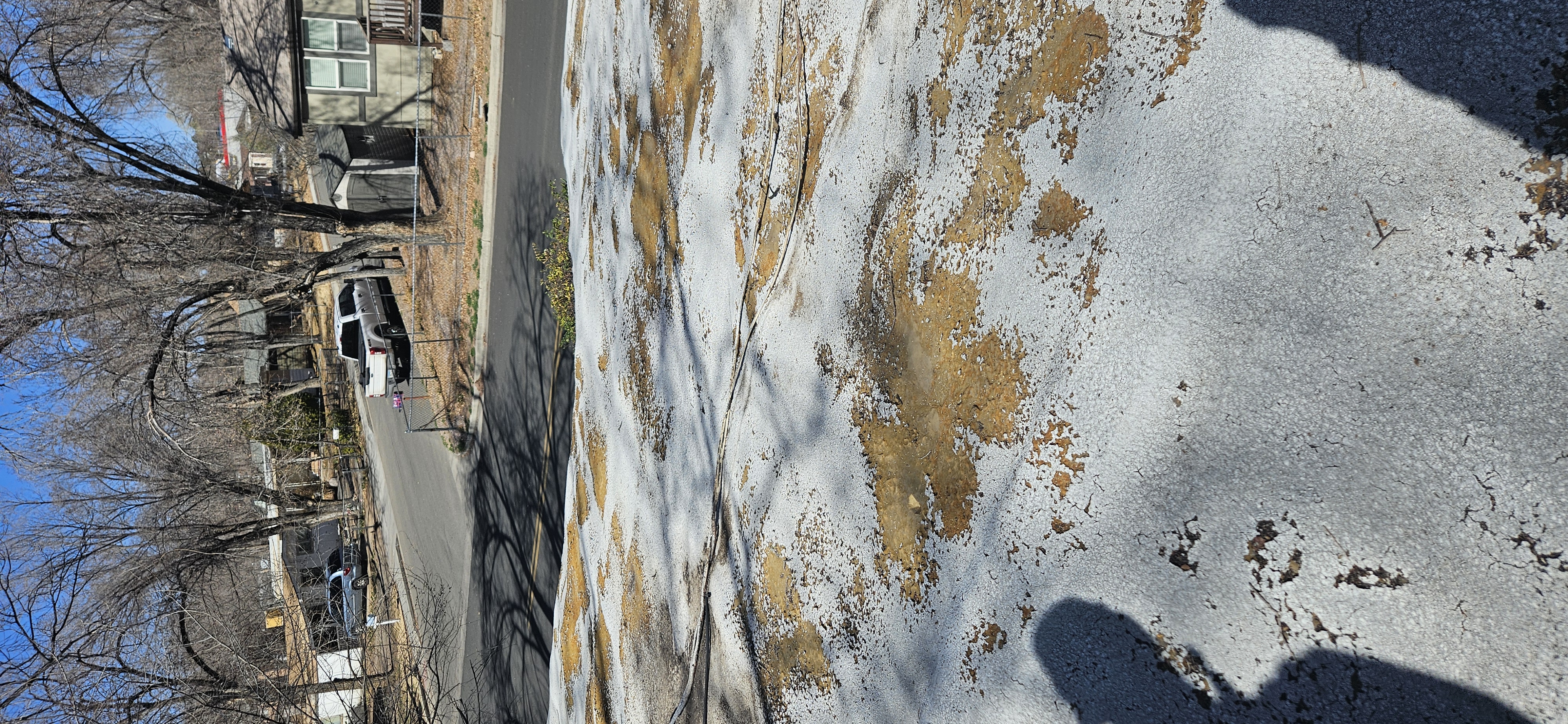
Debris can also become packed into roof valleys. Other relatively small issues include loose or missing tiles, a missing shingle, cracks in foam coatings, failed sealant around penetrations and deteriorated seals at pipes or vents.
A/C condensate lines should also be checked. Durafoam Roofing has responded to calls in which the homeowner believed the roof was leaking, only to find that the water was coming from a backed-up or leaking condensate line.
A lot of leaks look much worse than they actually are.
— Tim Forstie
Use Temporary Roof Patches Carefully
A temporary patch may keep water out until a proper repair can be completed, but it should not be mistaken for a permanent solution. On a foam roof, a small, safely accessible crack or puncture may be temporarily covered with a roof-grade elastomeric patching compound or a compatible roof sealant.
Compatibility is critical. Generic silicone, asphalt roofing cement and some spray-on hardware-store products may make a later professional repair more difficult. This is especially true on foam roofs, where new foam or coating must bond correctly to the existing system.
Keep any do-it-yourself application small and temporary. Applying random products across a larger area can obscure the original problem and interfere with materials used during the permanent repair.
The first thing is to understand that a temporary patch is just that—a temporary patch.
— Tim Forstie
Match the Repair to the Roofing System
Foam, tile and shingle roofs do not leak or get repaired in the same way. On a foam system, small coating cracks or punctures may admit water, but larger damaged areas require compatible materials and the correct application methods.
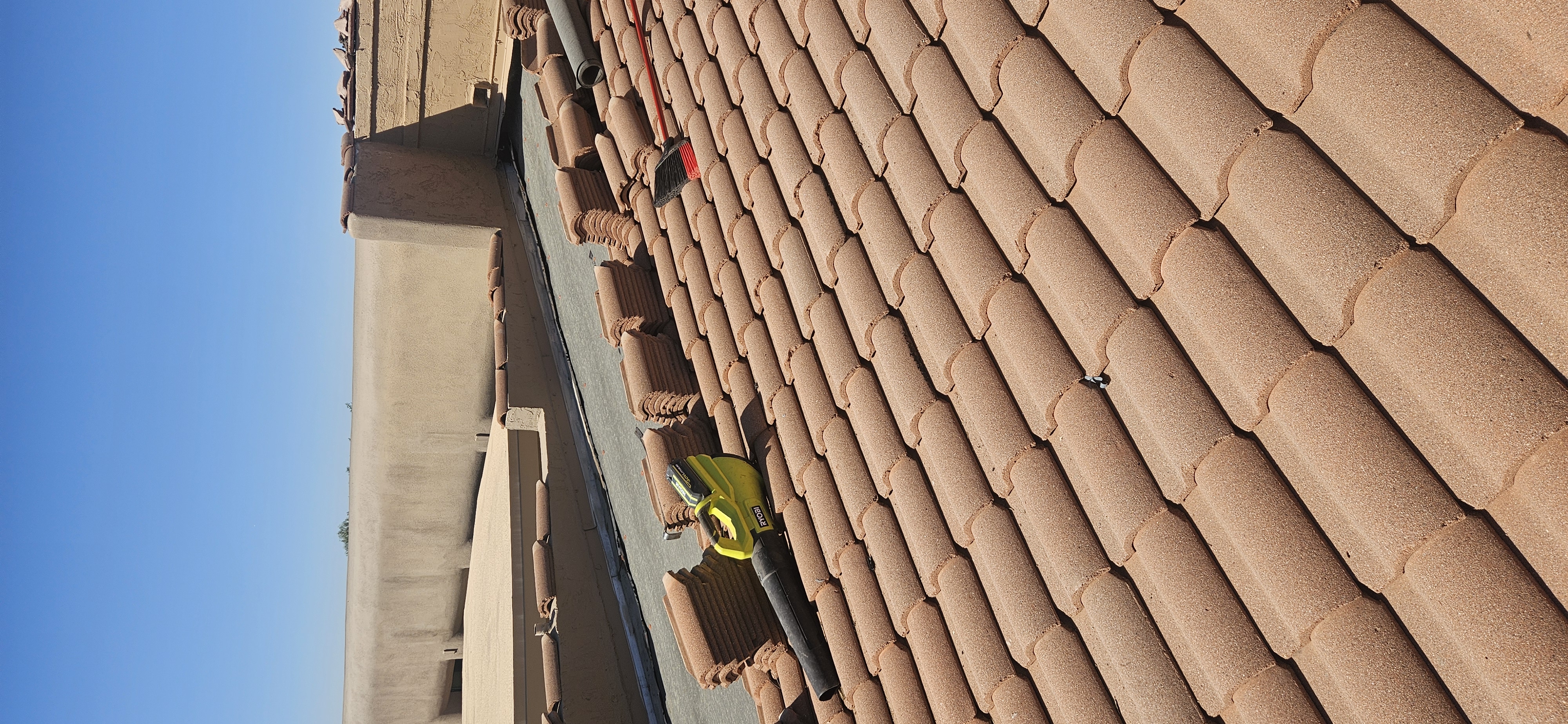
On a tile roof, the visible tile is not usually the primary waterproofing system. The underlayment beneath it performs that job, so caulking a tile may do nothing to address the actual source of the leak.
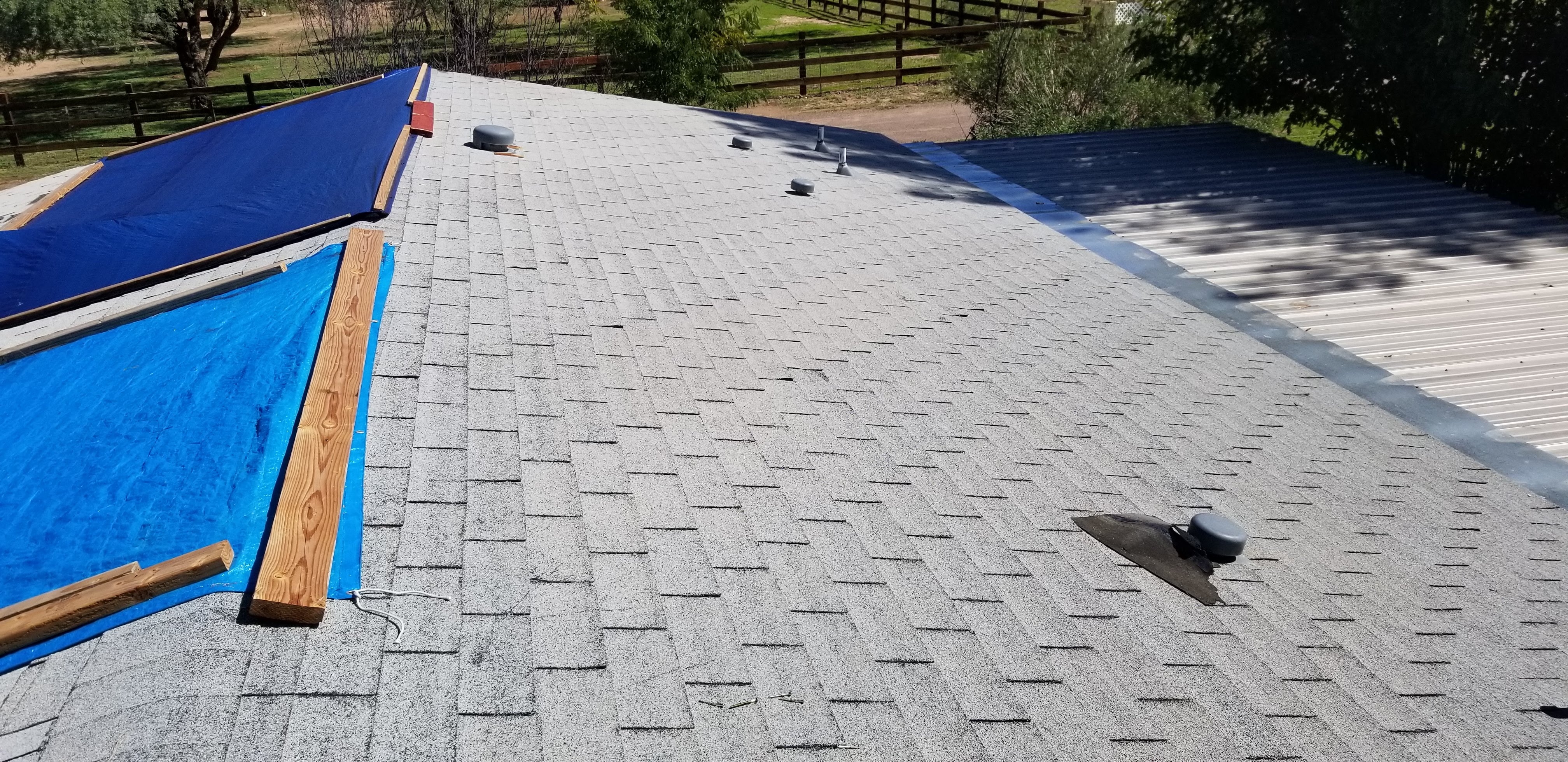
A missing or damaged shingle can also appear straightforward, but replacement shingles must be installed and lapped correctly. Smearing sealant over the area may only conceal the problem rather than produce a waterproof repair.
A repair that looks good from the top doesn't necessarily mean it's waterproof underneath.
— Tim Forstie
Know When a Roof Leak Needs Professional Repair
Safety is the first dividing line between a reasonable temporary measure and a professional repair. Homeowners should not attempt work that requires getting onto a steep roof, crossing questionable decking, working near electrical equipment or maneuvering around an A/C unit.
The next question is whether the source has been positively identified. If it has not, applying sealant where the stain appears may miss the leak entirely.
Damaged tile underlayment, wet decking, failed flashing, large areas of foam damage, penetration problems and structural issues call for specialized tools, materials and experience. Even if an obvious, safely accessible defect can be patched temporarily, the permanent work must account for the specific roof system and any hidden damage.
The goal shouldn't just be to stop the water today. It should be to make a repair that's still solid years from now.
— Tim Forstie
Why a Roof Inspection Can Prevent an Unnecessary Replacement
Tim has inspected flat roofs where homeowners were convinced that water coming through the ceiling meant the entire roof was failing. In some cases, the drain was completely packed with leaves and debris. Water could not escape, began ponding and eventually found a weak point.
After clearing the drain and removing the standing water, the team could inspect the affected area. When the roofing system was otherwise in good condition, only the small point of entry needed attention—not an entire roof replacement.
A/C drain lines can produce a similar false alarm. Tracing the moisture may reveal that the roofing system was not the original cause at all. Finding the actual source before deciding on the repair can keep a manageable problem from being treated like a full roof failure.
Before you assume the worst, figure out where the water is actually coming from.
— Tim Forstie
Keep reading: Roof Repair · Roof Repair Cost
Frequently asked questions
- Does a ceiling leak mean I need a new roof?
- Not necessarily. Clogged drains, A/C condensate lines, missing roofing materials, deteriorated sealant or a small damaged area can all cause leaks without requiring complete roof replacement.
- What can I put on a foam roof leak temporarily?
- For a small crack or puncture that can be reached safely, a compatible roof sealant or roof-grade elastomeric patching compound may provide temporary protection. Avoid random products that could prevent new foam or coating from bonding properly.
- Can I stop a tile roof leak by caulking the tiles?
- Usually not, because tile is not generally the roof's primary waterproofing layer. The source may be damaged underlayment beneath the tile.
- Why is my flat roof leaking after debris builds up?
- Leaves, dirt and debris can block drains and cause water to pond until it finds a weak point. Clearing the drainage path allows the water to leave, but the entry point should still be inspected.
- When is a roof leak too dangerous to fix myself?
- You should call Durafoam Roofing if you encounter a steep roof, weakened decking, or leaks near electrical equipment and A/C units. Specialized repairs are also necessary for failed flashing, damaged underlayment, or large sections of compromised foam. If you cannot positively identify the leak source, avoid DIY patches that may conceal the actual problem.
Reviewed by Durafoam Roofing Team.

Written by Tim Forstie, Owner of Durafoam Roofing
Learn more about Tim — Phoenix foam roofing specialist since 1989.