Foam vs. TPO vs. Built-Up: The Best Flat Roof for Phoenix Homes
For most flat and low-slope Phoenix homes, Tim Forstie considers spray polyurethane foam the first choice—but the existing roof, moisture, decking, penetrations, and drainage all affect the decision. Here is how foam, TPO, and built-up roofing compare based on the conditions he sees on Arizona roofs.
Which Roofing System Fits a Phoenix Flat Roof?
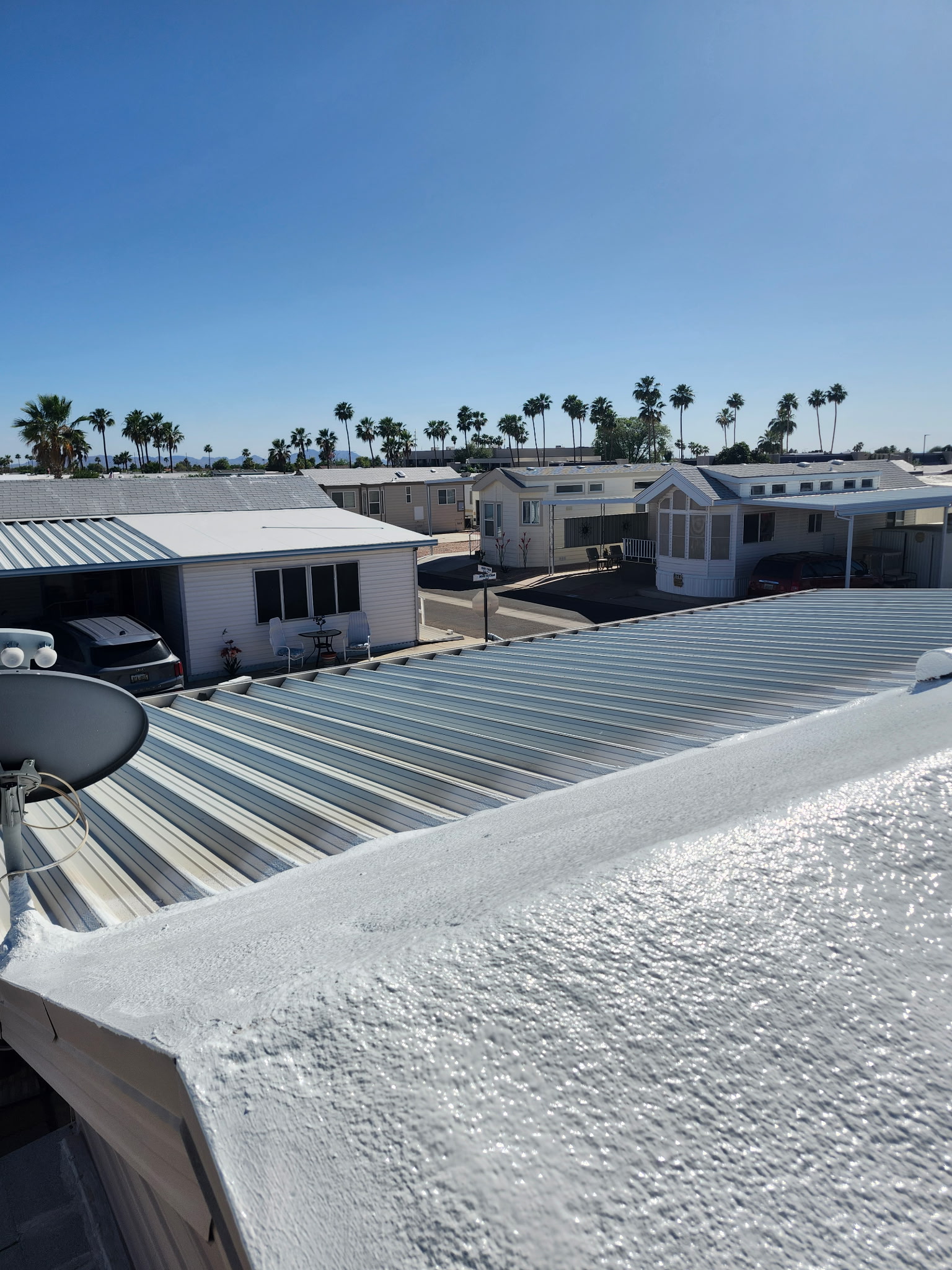
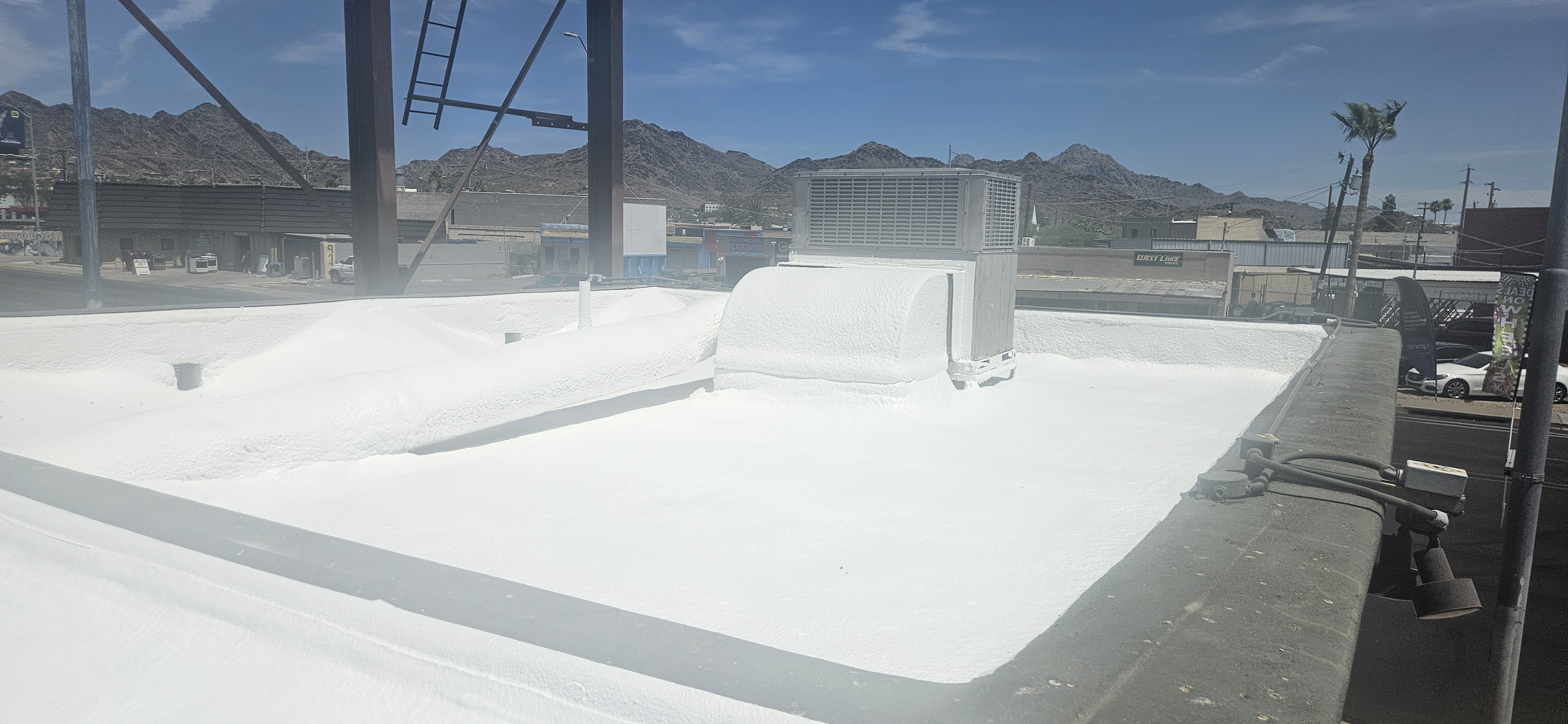
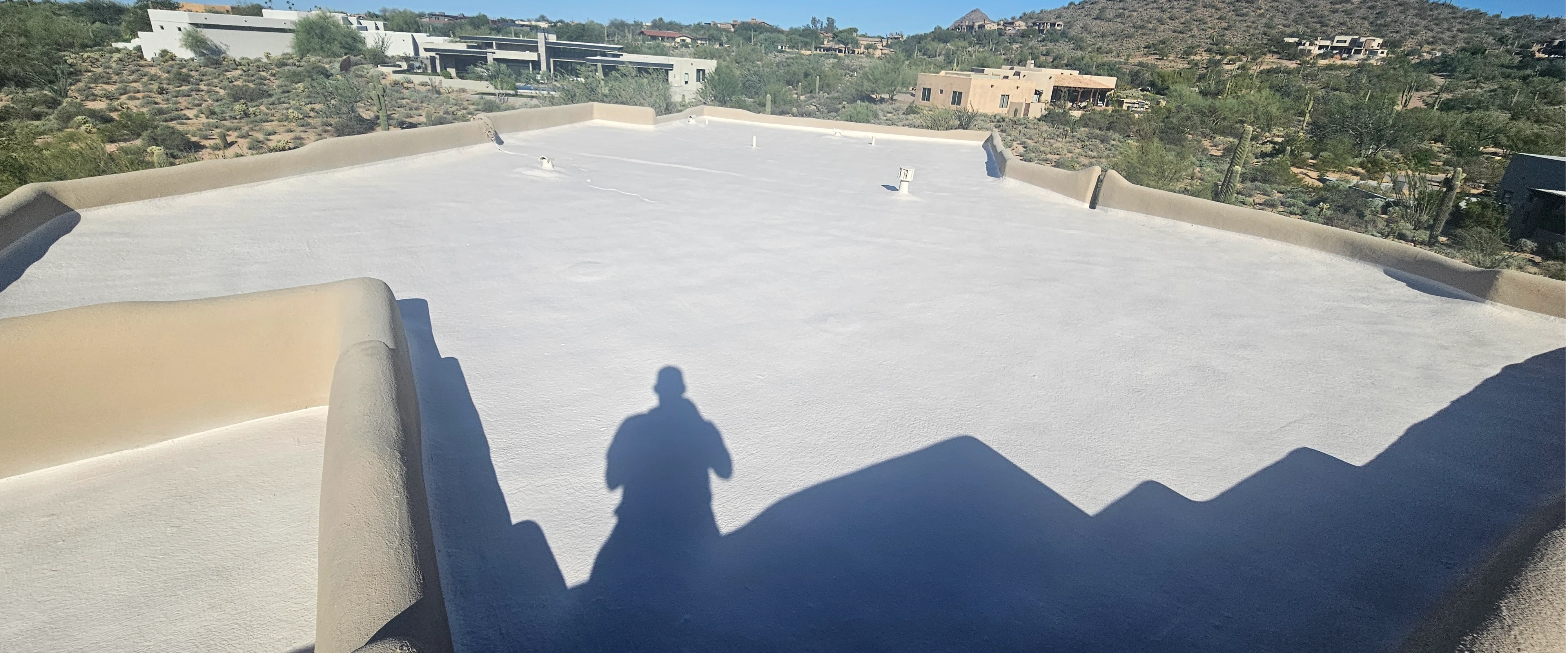
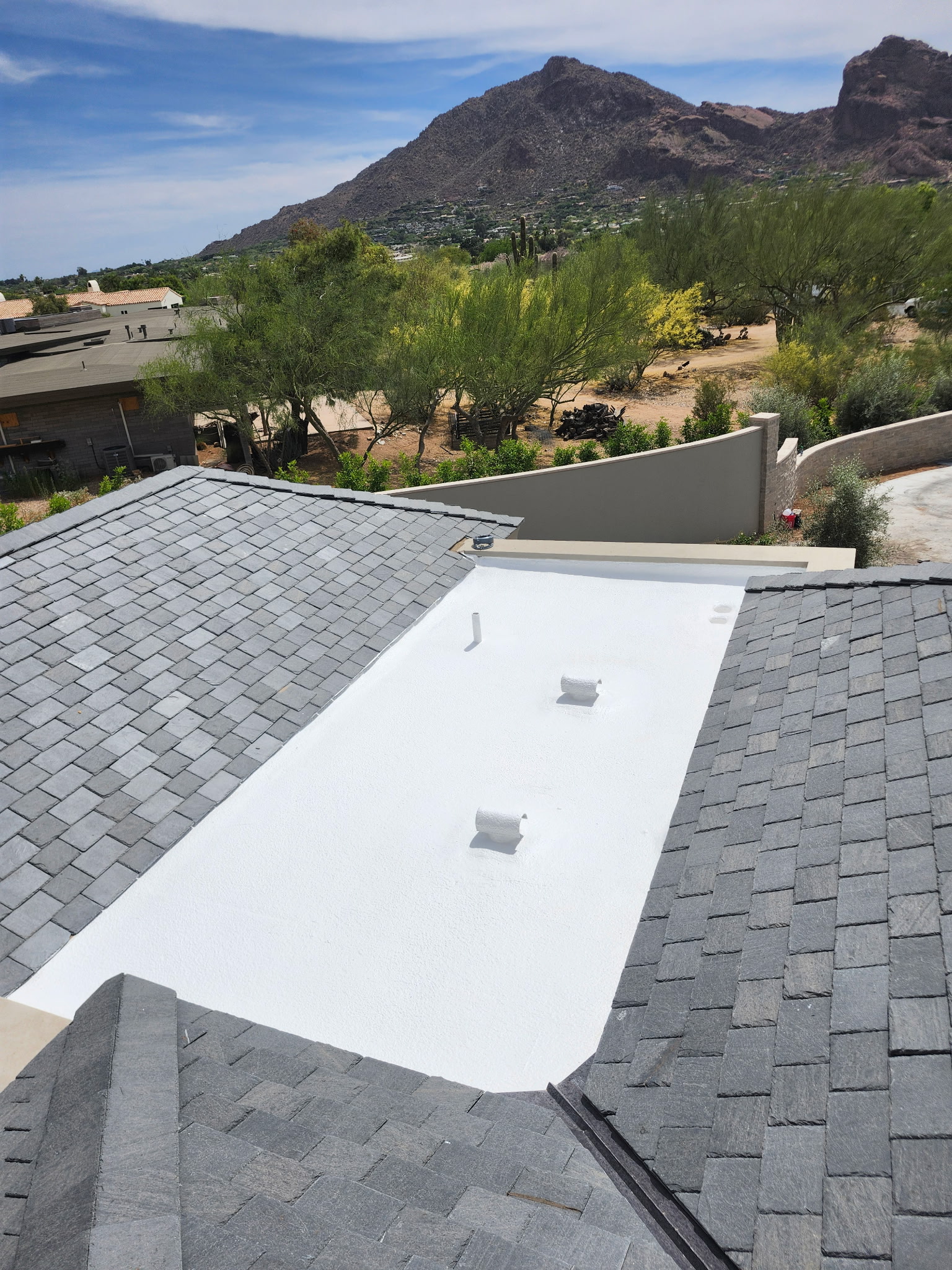
Foam is usually our first choice for Phoenix homes because it works especially well on flat roofs in our harsh climate. It is particularly useful on roofs with many penetrations, irregular shapes, or drainage issues. We can manipulate drainage, flows, and slopes, create a seamless surface, and even improve the slope toward drains when the existing slope is improper.
TPO can make sense on a very clean, open roof without much equipment or many penetrations. Built-up roofing is more often something we encounter on older existing roofs than a system we would choose first for a residential re-roof. In many cases, we install foam over an existing built-up roof.
What is underneath the roof can rule out any system. Wet insulation, trapped moisture, rotten or damaged plywood, and major structural damage must be addressed first. The structure must also be able to support the selected system. The additional weight of built-up roofing can be a consideration, while foam is a lighter-weight option.
For most Phoenix homes, foam is usually going to be our first choice because it works especially well on flat roofs.
— Tim Forstie
Upfront Cost, Tear-Off, and Installation Disruption
Foam can be very competitive on upfront cost because, depending on the existing roof's condition, we can often install it over what is already there instead of completing a full tear-off. That means less demolition, less debris, and often a faster installation with less disruption.
Reducing the amount of time a roof is open is especially valuable during monsoon season, when there is always a risk of storms. TPO may also be installed over some existing systems, but it can require more preparation, new insulation, or a cover board. Built-up roofing tends to be more labor-intensive, heavier, and more disruptive, particularly when tear-off is required.
Every roof is different, but avoiding an unnecessary tear-off is one of foam's major potential advantages for saving time and money.
Avoiding an unnecessary tear-off is one of the big advantages foam can offer, saving time and money.
— Tim Forstie
Insulation and Energy Efficiency in Phoenix Heat
Foam has an insulation advantage because the roofing system itself adds roughly R-6 to R-7 per inch of foam. TPO and built-up roofs depend much more on the insulation installed beneath them, and a typical built-up roof may not have insulation underneath it.
Properly coated foam and TPO can both be highly reflective, which is important in Phoenix and can help save on energy costs. Regardless of the system, the sun and heat will age roofing materials. Protective surfaces and underlayments eventually deteriorate under prolonged Arizona exposure and need inspection and maintenance.
The foam roofing system itself adds insulation—with every inch of foam, roughly R-6 to R-7 per inch.
— Tim Forstie
Common Heat, UV, Wind, and Monsoon Damage
On foam roofs, we watch for worn or cracked coating, exposed foam where the coating has worn away, blisters or bubbles, and damage around penetrations where cracking can occur.
With TPO, problems appear more often at seams, fasteners, and penetrations, as well as at punctures. Building movement can also cause membrane movement. Built-up roofs can develop cracks, blisters, and splits. Their surface coatings—including white elastomeric coatings sometimes applied as the roof ages—can also break down.
After a monsoon storm, homeowners should look for ponding water and loose or damaged roofing lifted by wind. Inside, major warning signs include stains on ceiling drywall and cracks in ceilings or walls. On the roof, check for cracks around penetrations or any area that looks noticeably different from the surrounding surface. Catching a problem early is usually easier and less expensive than waiting for an active leak and resulting interior damage.
With any type of roof, catching those problems early is usually much easier and less expensive than waiting for an active leak.
— Tim Forstie
Maintenance and Long-Term Ownership Costs
All three systems—and any roof, for that matter—need regular inspections and may require repairs. Foam is different because the protective coating can typically be renewed as it ages rather than requiring replacement of the entire roof.
A recoat every five, six, or seven years can keep the foam protected and essentially in its original condition. When properly maintained, the ability to renew the system without repeated tear-offs can make foam attractive from a long-term ownership-cost standpoint.
When it's maintained properly, the ability to renew the system without repeated tear-offs can make foam very attractive from a long-term ownership cost standpoint.
— Tim Forstie
Finding and Repairing Leaks in Each System
Foam is generally the easiest of the three systems to troubleshoot and repair. Its closed-cell structure tends to limit how far water can travel and the areas where it can pass through, so the leak is often close to the damaged spot. A typical repair involves removing damaged material, replacing foam if necessary, and restoring the protective coating.
With TPO, water may travel beneath the membrane from a failed seam, penetration, or puncture before appearing indoors. That can make the source difficult to pinpoint. Built-up roofs may be even harder to trace because moisture can move between multiple roofing layers. Ponding water, old repairs, multiple roof systems, wet insulation, and penetrations can all complicate the search.
A ceiling stain therefore does not necessarily identify the roof entry point. The actual source may be quite a distance from where water appears inside the home.
If you see a water stain in your ceiling, the actual source of the leak could be quite a ways away from where you're seeing the water coming down inside the home.
— Tim Forstie
When Hidden Moisture Changes the Re-Roofing Plan
We sometimes inspect a home expecting a straightforward re-roof and discover trapped moisture or deteriorated decking beneath the existing system. That finding does not usually change our preferred new system from foam to TPO or built-up roofing, but it can change the preparation substantially.
We may initially believe we can install foam over the existing roof. After a more thorough inspection, we may instead recommend tearing off the old system, repairing the underlying damage, and then installing the new foam roof. The decision comes down to producing the best long-term result for the homeowner rather than covering moisture or damaged materials to avoid a necessary tear-off.
We are always about what's going to produce the best result long-term and the best result for the homeowner—the most cost-effective upfront and long-term.
— Tim Forstie
Keep reading: Foam Roof Coating & Recoating · Foam Roof Recoating Cost
Frequently asked questions
- Is a foam roof better than TPO for an Arizona house?
- Spray polyurethane foam is typically the best choice for Phoenix homes because it creates a seamless, lightweight barrier that can correct poor drainage and irregular slopes. While TPO works well on simple roofs with few penetrations, foam offers superior insulation and can often be installed over existing roofs to avoid costly tear-offs.
- Can spray foam go over my old flat roof?
- Yes, spray foam can often be installed directly over your existing roof to save time and money on demolition. However, a full tear-off is required if a professional inspection reveals trapped moisture, wet insulation, or structural damage to the decking. When the old surface is sound, foam provides a seamless, lightweight solution without the mess of a total removal.
- Does foam roofing help keep a Phoenix home cooler?
- Spray polyurethane foam provides superior insulation by adding R-6 to R-7 per inch to your roof. When combined with a highly reflective white coating, this system significantly reduces heat transfer. Unlike TPO or built-up roofs, the foam itself acts as a powerful thermal barrier to keep interiors cooler.
- Why is my flat-roof leak showing up far from the damaged area?
- Water often travels between layers or underneath membranes in TPO and built-up roofing before appearing inside. Because foam uses a closed-cell structure, it typically stops water from migrating far. This means the actual roof damage is usually located very close to the visible ceiling leak.
- How often does an Arizona foam roof need recoating?
- A Phoenix foam roof typically requires recoating every five years to protect the underlying material from UV damage. Periodic inspections are necessary to check for cracks, blisters, or worn areas where foam has become exposed. Regular maintenance allows you to renew the system indefinitely without a full tear-off.
Reviewed by Durafoam Roofing Team.
Written by Tim Forstie, Owner of Durafoam Roofing
Learn more about Tim — Phoenix foam roofing specialist since 1989.