Spray Foam Roofing (SPF) Explained: How It Works, Start to Finish
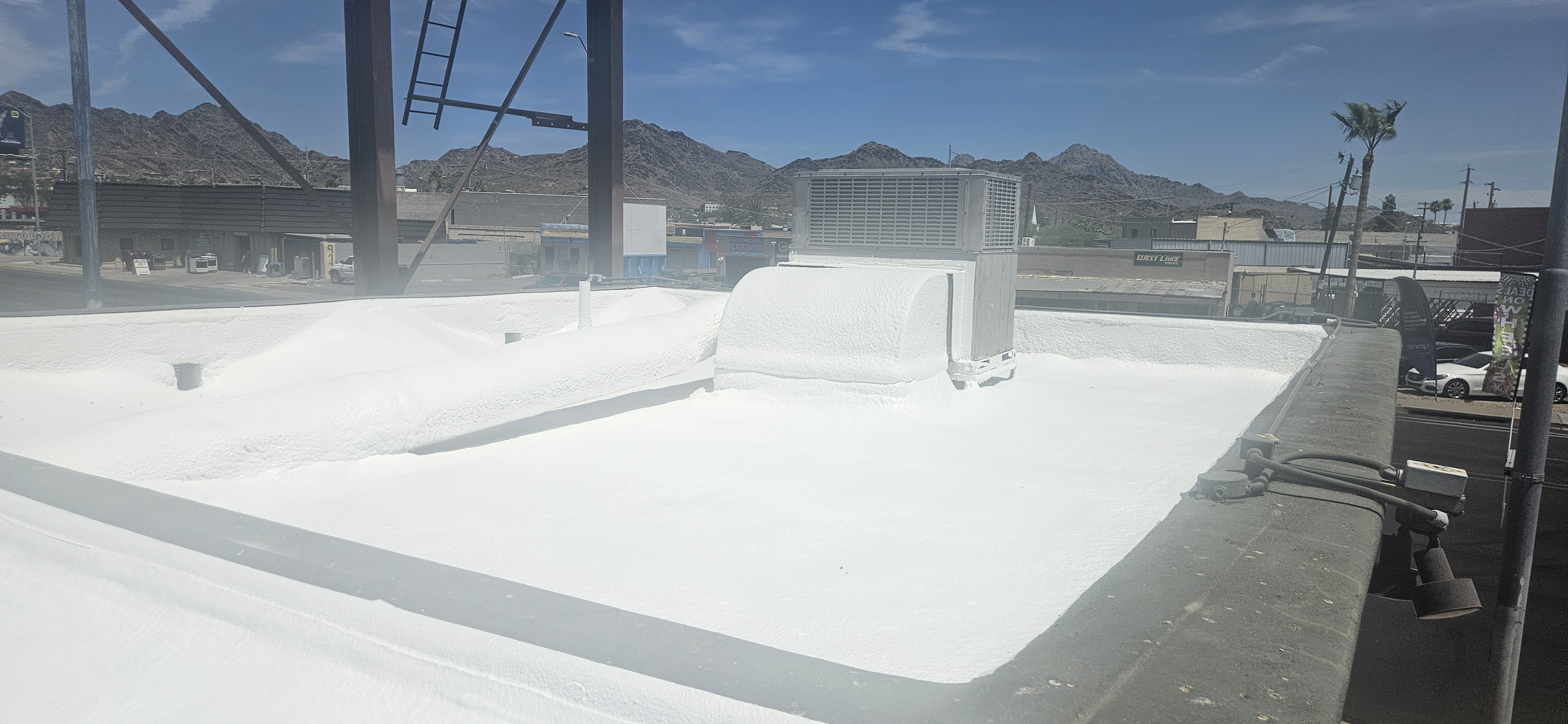
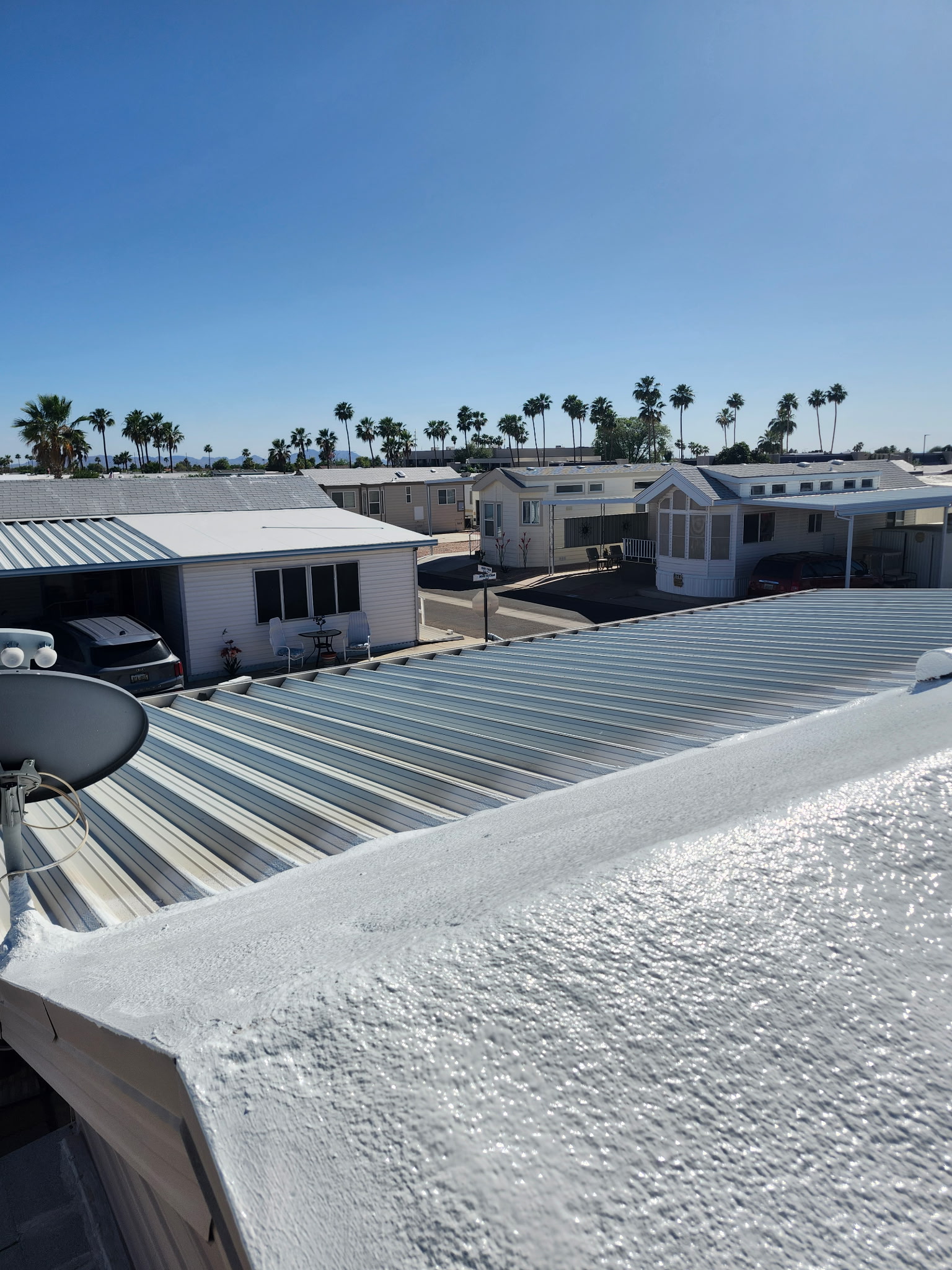
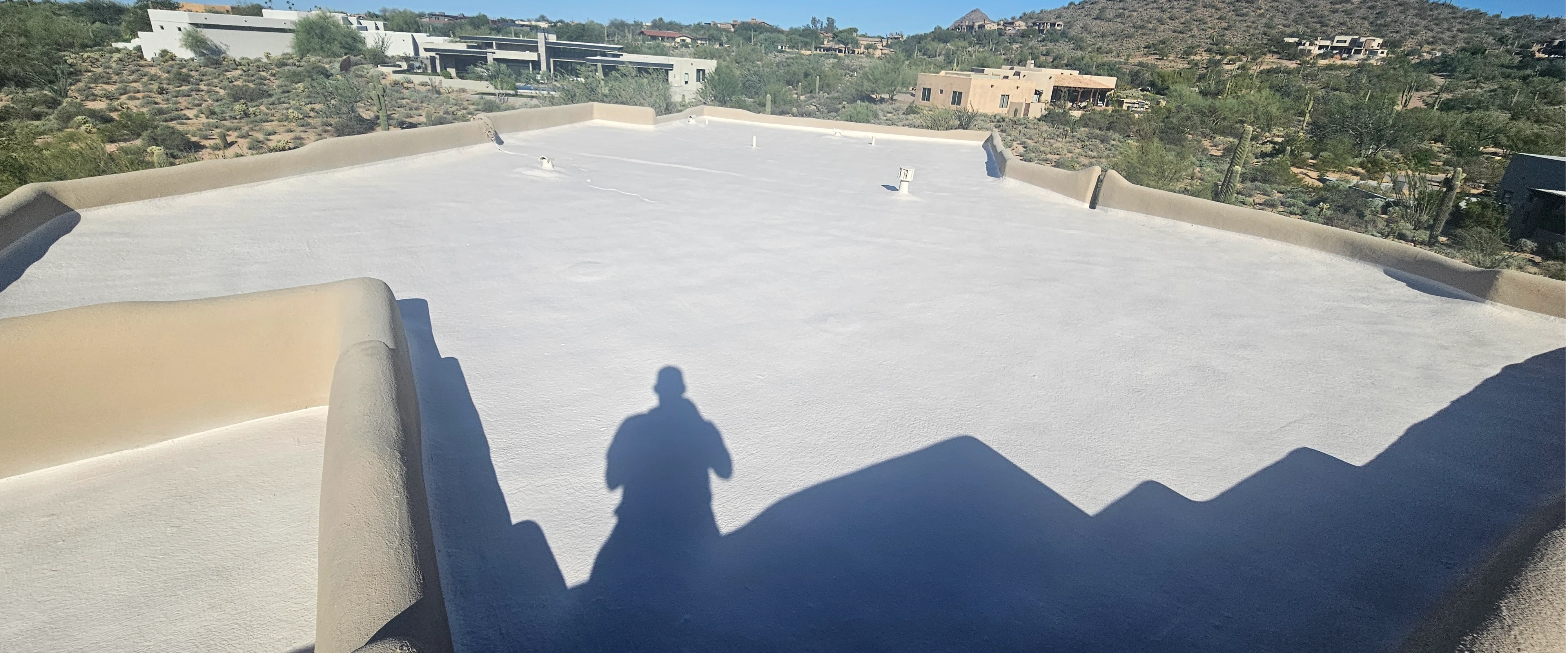
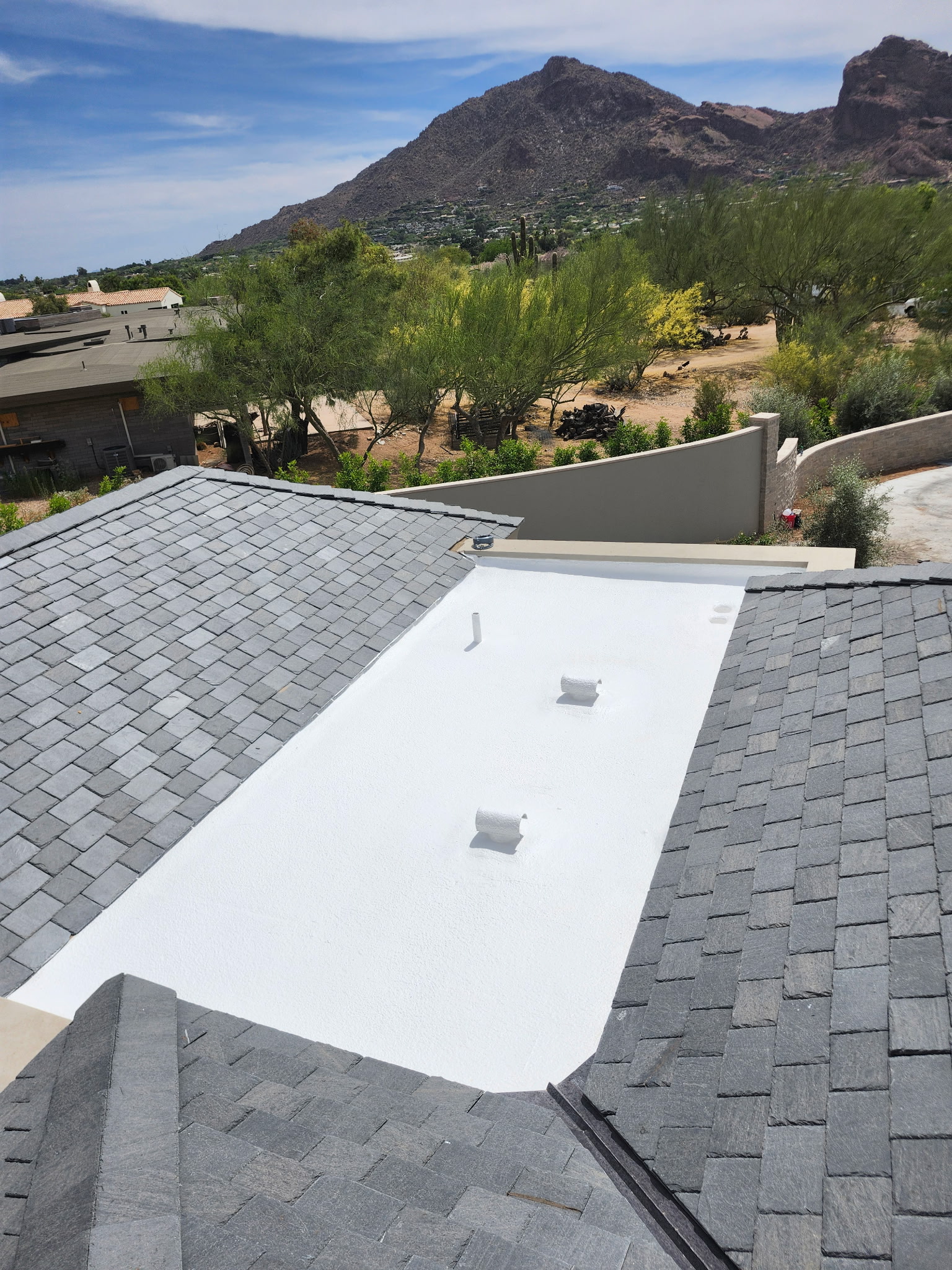
Spray polyurethane foam (SPF) roofing is a seamless roof created on site: two liquid chemicals meet at the spray gun, expand roughly thirty times in volume on contact with your roof deck, and cure into a rigid, closed-cell layer in seconds. A reflective elastomeric coating goes over the top, and that coating is what protects the foam from the Phoenix sun.
Here is the whole process, in order, with no mystery.
Day one: prep, not spraying
People are surprised that the first day usually involves no foam at all. Foam bonds to a clean, dry, sound surface and to nothing else, so the day goes to power-cleaning, removing failed coating and any saturated material, re-securing loose decking, and cutting out wet insulation. If the deck is damp, spraying over it traps the moisture permanently. Skipping prep is the single most common reason a foam roof fails early.
Masking
Foam overspray drifts. Cars, windows, walls, solar panels, HVAC housings, and your neighbor's driveway all get masked before the gun is picked up. A crew that masks carelessly tells you what the rest of the job will look like.
Spraying the foam
The two components — an isocyanate and a resin — are heated, pressurized, and combined at the gun tip. They react instantly, rising and hardening within seconds. The crew works in passes, typically half an inch to an inch at a time:
- One inch is our standard on most Phoenix homes and meets code and warranty requirements.
- 1.5 inches on substrates such as plank wood decks.
- 2 inches or more when a homeowner wants extra R-value, or where we are building up low spots to re-slope water toward the drains.
Extra thickness buys insulation, not waterproofing. The coating does the waterproofing. Around vents, curbs, skylights, and parapet walls, the foam wraps everything as one continuous surface — no flashing, no laps, no seams. That is the whole structural advantage of the system.
Coating: the step that decides the lifespan
Bare foam degrades in UV within months, so the roof is not finished until it is coated. We apply two coats of reflective elastomeric at a specified mil thickness, usually with granules embedded in the final coat for foot-traffic protection. The coating reflects heat, blocks UV, and is the layer that gets renewed roughly every 5 years — see foam roof coating and recoating.
The walk and the paperwork
We walk the finished roof with you, point out the drains, note where the walk paths are, and hand over documentation and the warranty. Then we put you on a recoat interval, because a foam roof kept coated lasts decades and one left bare does not.
How long the job takes
A typical Phoenix home is one to three days depending on square footage, prep, and weather. Foam cannot be sprayed in wind above the manufacturer's limit or onto a wet deck, so monsoon season sometimes shifts a schedule by a day. Commercial buildings run longer — see commercial foam roofing.
What it costs
Pricing depends on square footage, how much wet material has to come off, penetration count, and access. We put ranges in writing after we see the roof; the foam roof replacement cost guide shows the bands, and the free inspection gets you exact numbers.
Keep reading: Foam Roof Coating & Recoating · Foam Roof Recoating Cost
Written by Tim Forstie, Owner of Durafoam Roofing
Learn more about Tim — Phoenix foam roofing specialist since 1989.