What Type of Roof Is Best for my home in Phoenix?
The best roof for a Phoenix home depends on the house—not simply which material costs more or looks better. Durafoam Roofing owner Tim Forstie explains how roof slope, structural load, insulation, drainage and existing conditions determine whether foam, tile or shingles make the most sense.
Start With the House, Not the Roofing Material
When I evaluate a home, the first thing I look at is how the house is built. Is the roof flat or pitched? What material is on it now, and how many layers are there? What condition is the deck in? How does the roof drain? Are there AC units, skylights, vents or other penetrations?
Those details usually point us in the right direction quickly. A flat or low-slope roof generally leans toward foam. Tile or shingles may make more sense on a pitched roof. I also consider weight, insulation, HOA requirements, the homeowner’s budget and how long they plan to stay in the house.
The goal is not to name one universally superior material. It is to choose a complete roofing system that fits the particular home and homeowner.
I don’t like making a roofing recommendation just based on “which material is best.” The better question is: which roofing system makes the most sense for this specific house?
— Tim Forstie
Phoenix Heat and Monsoons Raise the Stakes
Phoenix roofs face extreme heat and constant UV exposure, followed by monsoon storms that can put a lot of water and wind on a roof at once.
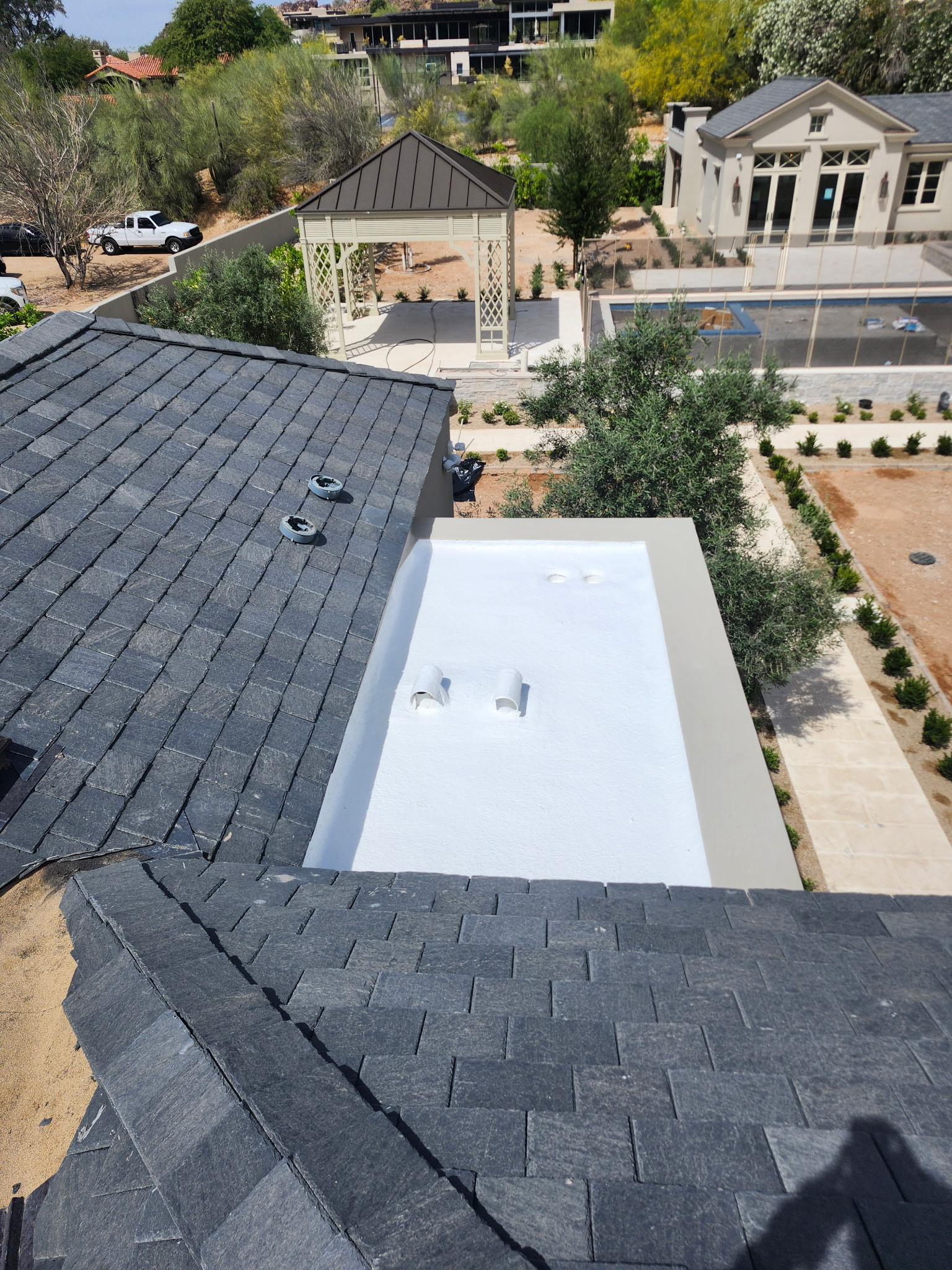
For flat and low-slope roofs, I’m a big fan of foam because it creates a seamless system, handles penetrations well and adds insulation against the heat. For pitched roofs, tile is hard to beat for longevity. Shingles can be a good option when budget carries more weight.
Homeowners often get into trouble by choosing strictly on price or appearance. Some choose shingles because they cost less, assume tile must be best because it costs more, or accept the lowest foam bid without asking how much foam will actually be installed. The quality of the installation matters just as much as the material. A properly installed shingle roof can outperform a poorly installed tile roof, while foam installed at the correct thickness can last a very long time with proper maintenance.
In Phoenix, the installation matters just as much as the roofing material.
— Tim Forstie
Foam Is Usually the Best Fit for Flat and Low-Slope Roofs
Foam has several advantages on flat Phoenix roofs. It is seamless, conforms around penetrations and adds R-value as part of the roofing system. That insulation can make a noticeable difference inside a home beneath a hot flat roof.
Foam also requires ongoing care. It should receive periodic inspections and recoating, but when it is installed correctly and maintained, it can keep going for a very long time.
Many existing flat roofs can be foamed over, which can save the homeowner quite a bit of money. Before making that recommendation, I check whether the current roof is dry, solid and well-adhered. I look for soft spots, trapped moisture, badly deteriorated material, loose sections, damaged decking and multiple old layers. We will often take a small core sample to identify the roofing systems underneath and count the existing layers.
If the roof is basically sound, we can usually clean it, complete necessary repairs, prepare the surface and install foam over it. If there is widespread deterioration, wet or loose roofing, bad decking or too many layers, a tear-off makes more sense. Although removing everything to the deck costs more upfront, it lets us correct the underlying problems and give the new system a solid foundation.
I’d rather do that than put a great roofing system over a bad roof and hope for the best.
— Tim Forstie
Foam Can Make a Flat Patio More Comfortable
For a flat patio roof in Phoenix, I usually lean toward foam instead of rolled asphalt, particularly when there is living space or a frequently used area underneath.
Rolled roofing can work, but it provides little insulation. Its surface becomes extremely hot during the summer, allowing much of that heat to transfer through the roof deck. Foam is both roofing and insulation. We have seen a noticeable difference in spaces below after adding it, with less heat radiating from the ceiling. The effect can be even more significant over an enclosed patio or conditioned space.
Foam also lets us create a seamless surface around posts, walls, drains, skylights and other penetrations instead of depending on numerous laps and seams. In some cases, it can be used to improve slope and direct water where it needs to go. It costs more upfront than basic rolled asphalt, but it provides a roofing system and added insulation at the same time.
On patios that were hot and uncomfortable before, you can really cut down on that heat radiating from the ceiling.
— Tim Forstie
Tile Makes the Most Sense When the Home Already Has It
Tile can be an excellent long-term choice for a pitched roof, but it is heavy. If a home does not already have tile, we generally would not recommend converting it unless we know the structure was designed for the additional weight. There are usually better options when that structural capacity is uncertain.
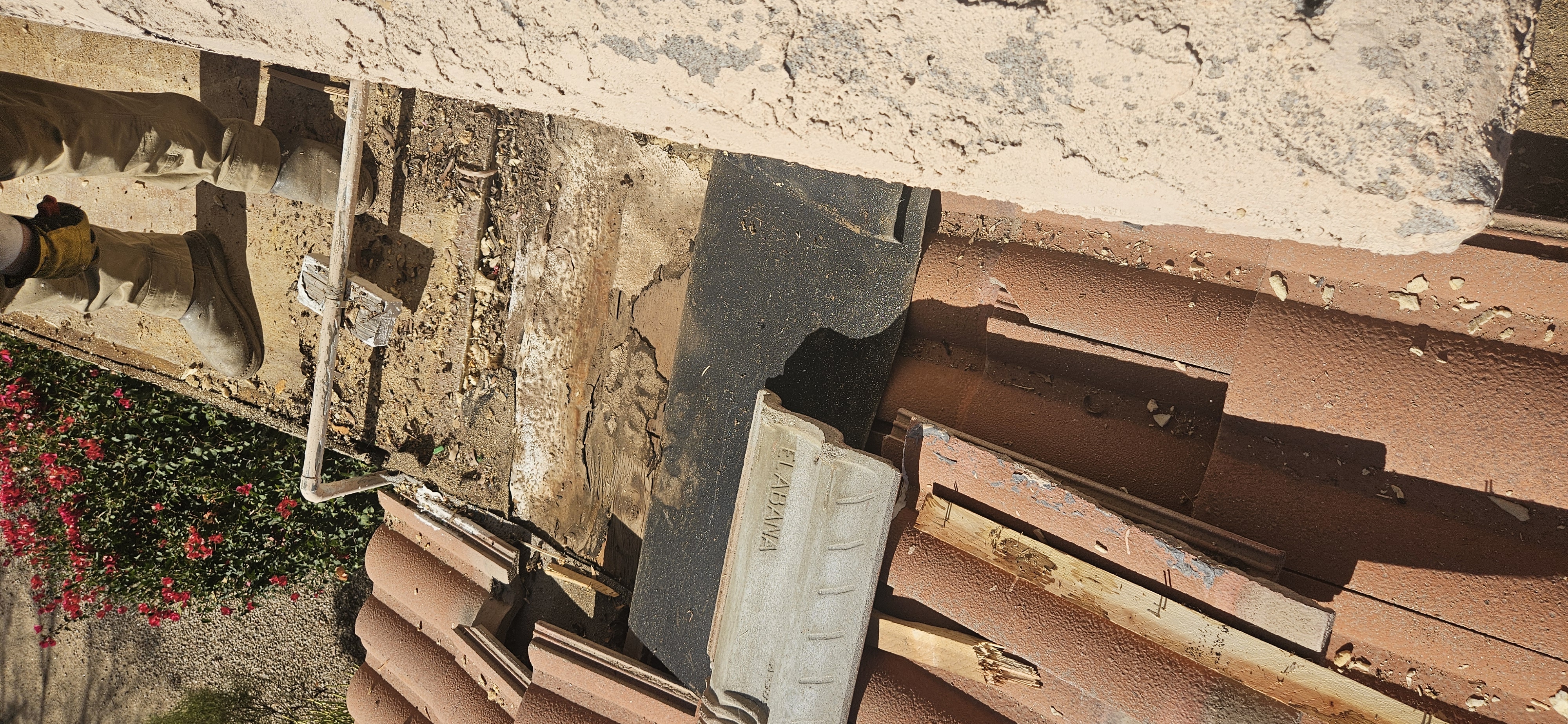
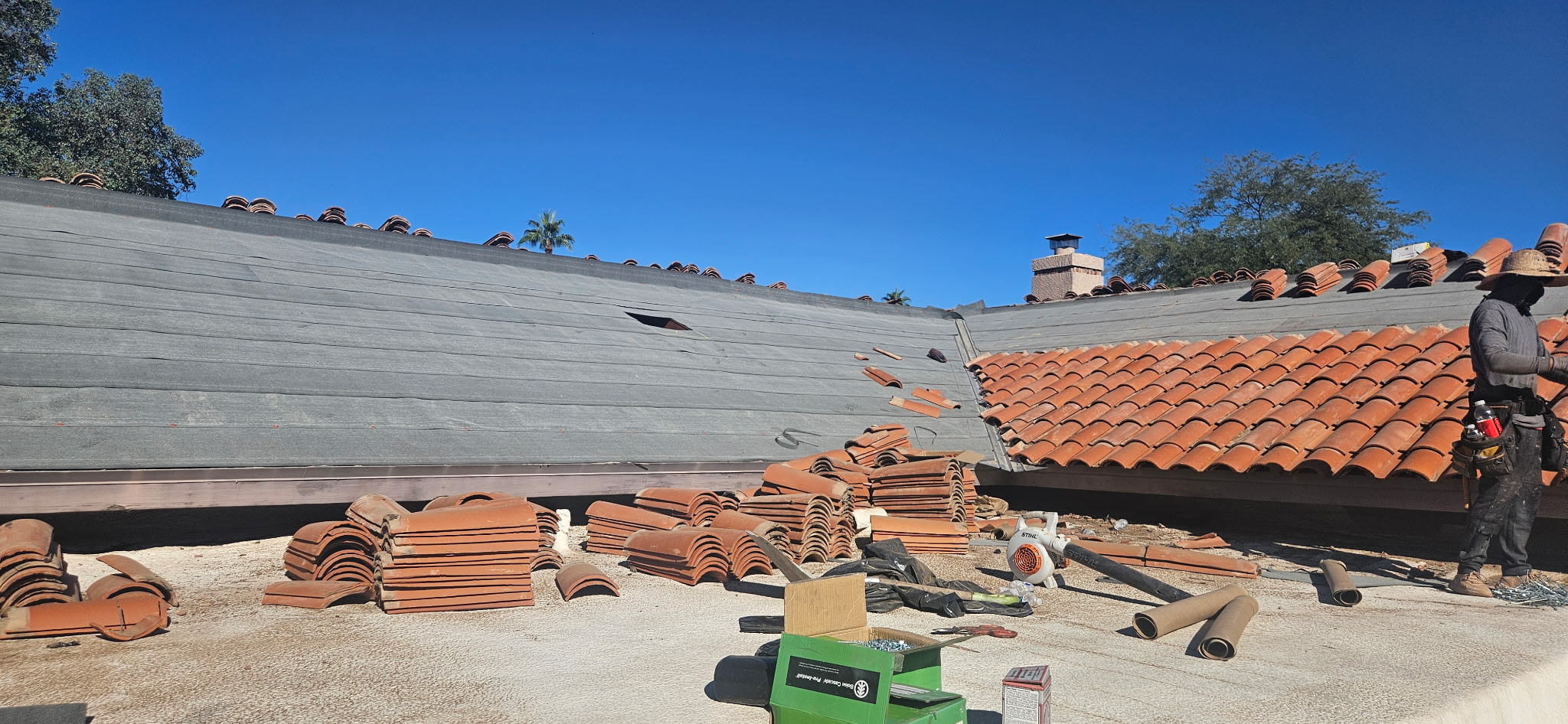
If the home already has a tile roof, I typically prefer removing and resetting the existing tile. We take it off, replace the underlayment, address anything underneath that needs attention and reinstall the tile. Tile itself can last a long time, although its underlayment eventually needs replacement.
Before beginning, we verify whether the tile profile and color are still available. Some older products can be difficult or impossible to match. Some tiles will inevitably break during a project, and the homeowner may also need replacements years later. Most Phoenix homes have fairly common tile we can still source, but it is better to confirm availability before taking the roof apart.
I’d rather verify that before we tear the roof apart than find out afterward that replacements don’t exist.
— Tim Forstie
Shingles Can Be a Practical Choice for Pitched Roofs
Shingles are a straightforward option for pitched roofs and can make sense when budget is a major factor. They should not be dismissed solely because they cost less than tile. A well-installed shingle roof can perform better than a poorly installed, more expensive system.
The decision should still reflect the home’s slope, existing roof, HOA requirements and the homeowner’s plans. Budget matters, but it should not force a roofing material onto a house where it does not belong.
Compare Long-Term Fit, Maintenance and Cost
I begin with what the house is telling us before getting to budget. Slope helps narrow the options first: foam usually fits flat or very low-slope roofs, while shingles or tile may suit pitched roofs. Structural load is next, especially when considering tile. Insulation is another major factor in Phoenix, where foam’s added R-value can make a noticeable indoor difference.
Every system also has maintenance considerations. Tile underlayment eventually needs replacement, shingles are relatively straightforward, and foam needs periodic inspections and recoating. Homeowners should compare those needs with their budget and expected time in the home.
I prefer to show homeowners the options that genuinely fit the property and explain where their money is going. A lower initial price does not necessarily produce the lowest long-term cost.
The cheapest roof today isn’t always the cheapest roof over the next 20 or 30 years.
— Tim Forstie
Keep reading: Phoenix Roofing Costs · Free Roof Inspection
Frequently asked questions
- Should I use foam on a flat roof in Arizona?
- Foam is often the best choice for flat or low-slope Phoenix roofs because it creates a seamless barrier and adds thermal insulation. It handles penetrations like AC units well and can often be installed over existing materials if they are dry and sound. This system requires regular maintenance and recoating to ensure long-term durability.
- Can I replace shingles with tile on my Phoenix house?
- Replacing shingles with tile is generally not recommended unless your home’s structure was specifically designed to handle the extra weight. Adding heavy tile to a frame built for lighter shingles can cause structural issues. If your roof was not originally engineered for tile, choosing another pitched-roof material is typically a safer, more practical option.
- Does a foam patio roof reduce the heat underneath?
- Spray foam significantly lowers temperatures under flat patios by acting as both a seamless roof and thermal insulation. This material prevents the sun's heat from radiating through the deck, which makes enclosed or frequently used outdoor spaces much cooler. It is a more effective barrier against Phoenix heat than traditional rolled asphalt.
- When does a flat roof need to be torn off before adding foam?
- A tear-off is necessary if the existing roof has widespread deterioration, trapped moisture, or a damaged deck. It is also required if there are too many old layers or loose materials. If the surface is sound, dry, and well-adhered, it can typically be repaired and foamed over without removal.
- Are tile roofs always better than shingles in Phoenix?
- Not necessarily, because the best material depends on your home’s specific slope and structural weight capacity. While tile is durable, a high-quality shingle installation often outperforms a poorly installed tile roof. Factors like your budget, HOA rules, and how long you plan to stay in the home should guide the final choice.
Reviewed by Durafoam Roofing Team.

Written by Tim Forstie, Owner of Durafoam Roofing
Learn more about Tim — Phoenix foam roofing specialist since 1989.