How to Choose a Roofing Contractor in Phoenix
Choosing a roofing contractor in Phoenix means looking beyond the final price. Tim Forstie, owner of Durafoam Roofing, explains how homeowners can compare inspections, scopes, materials, warranties, and local experience before making a decision.
Choose a Roofer Who Understands Your Roof System
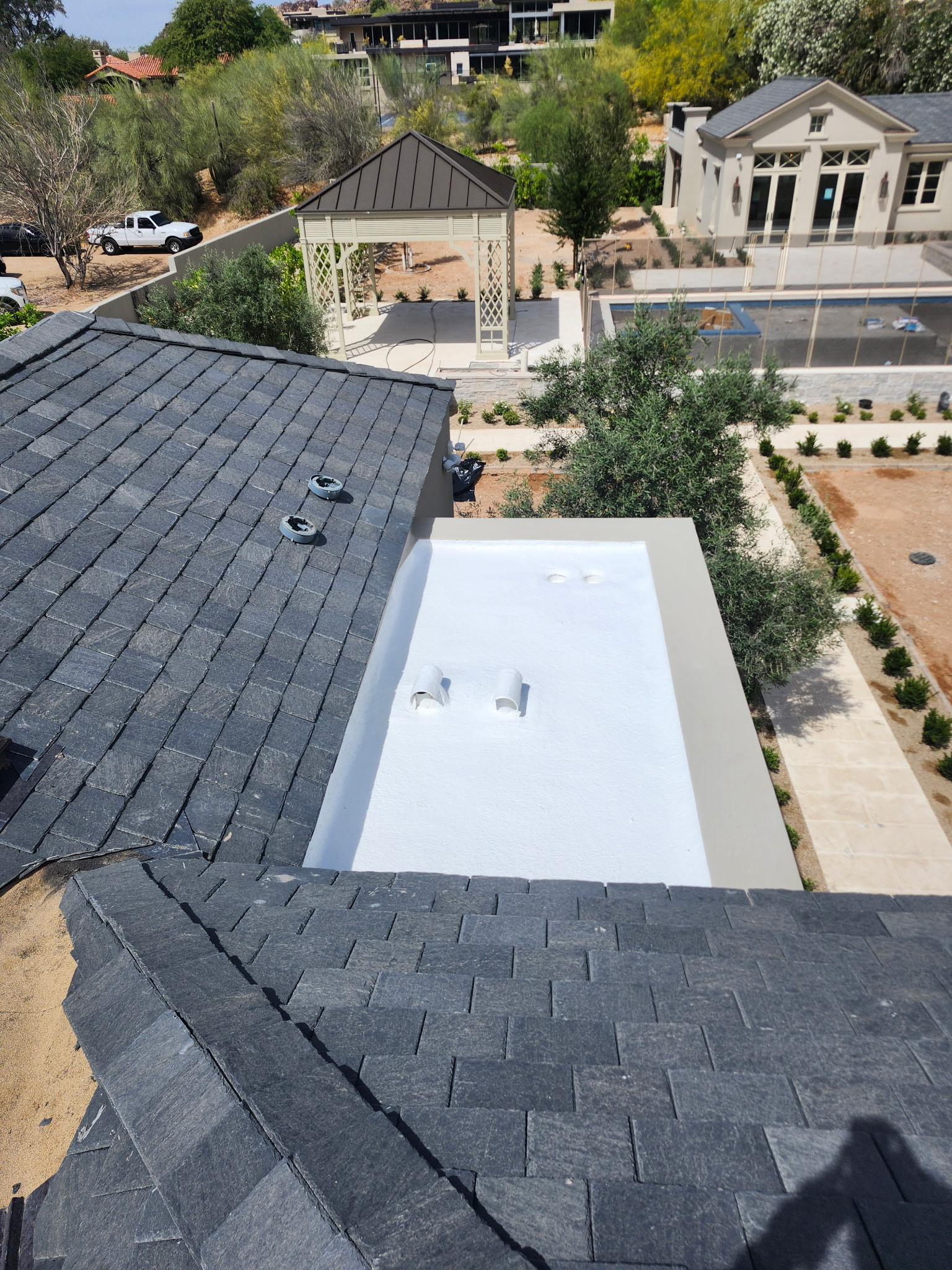
The first thing to determine is whether the contractor understands the type—or types—of roofing on your home. Phoenix properties may have foam, tile, shingles, rubber, asphalt, or another low-slope roofing system. Some homes combine tile with a flat foam section or shingles with a low-slope patio or garage cover.
Each system has different problems, repair methods, materials, and maintenance needs. A foam roof problem is not the same as a tile underlayment failure, and neither should be treated like a flat-roof drainage issue. A contractor who only understands one system may miss the actual source of the problem or fail to address every roof area properly.
A good roofer should inspect the roof, explain what is visible, and connect those findings to the recommendation. Depending on the roof, that may mean a localized repair, a foam recoat, tile underlayment replacement, or a complete replacement. If the contractor cannot clearly explain the recommendation, Tim considers that a red flag.
Homeowners should also look for a licensed, local contractor with an established history, documented findings, clear communication, and a willingness to stand behind the work. Storm chasers can enter large cities after severe weather and disappear just as quickly. The company you hire should still be available when the roof needs future maintenance or repairs.
“At the end of the day, you're not just hiring someone to put material on a roof, you're hiring someone to give you the right answers.”
— Tim Forstie
Why Phoenix Roofing Experience Matters
Phoenix is tough on roofs. Months of extreme heat and UV exposure are followed by sudden wind, dust, debris, hail, and heavy bursts of monsoon rain. That combination can expose weak points quickly.
Foam roofs depend on their protective coating to shield the foam from sunlight. Tile roofs can look fine from the ground even when the underlayment underneath—the part that protects the home—is old, brittle, cracked, or curling at the seams. Shingles can dry out and wear faster in Arizona heat.
Local experience teaches a contractor how foam and coatings age in the Arizona sun, where tile systems commonly leak, how monsoon storms affect roofs, and how flat roofs drain. It also reveals which shortcuts are likely to fail early. Durafoam Roofing has worked on Valley roofs since 1989, giving the company a long history of seeing what does and does not hold up here.
That knowledge may not transfer directly from another region. A storm-chasing company based in the Midwest could apply recommendations suited to a cold climate rather than the conditions found in Phoenix.
“A roof in Phoenix is not the same as a roof in a cooler or wetter climate.”
— Tim Forstie
A Thorough Inspection Should Come Before the Recommendation
A contractor should inspect the whole roof before recommending repair or replacement. A ceiling leak does not prove that water entered directly above the visible stain. Water can travel after entering around a skylight, AC unit, drain, scupper, wall, or flashing detail.
Looking only at the obvious area can lead to a patch that does not address the source. A complete inspection helps distinguish an isolated defect from a broader roof-system problem. Sometimes a small repair is enough; other times, the overall condition points to a larger issue. The contractor cannot know without getting onto the roof and examining it thoroughly.
Photos should support the findings, especially if a contractor recommends a major project. Homeowners should be cautious when told they need a new roof without being shown what failed or receiving a clear explanation of why replacement is necessary.
“A leak inside the house does not always mean the problem is directly above that spot.”
— Tim Forstie
How Roof Condition Determines the Right Scope of Work
The appropriate recommendation depends on both the roof type and its current condition. On a foam roof, worn coating may call for a recoat if the foam remains sound. Tim says foam roofs generally need recoating about every five years. Small cracks, bird holes, and isolated damage may be repairable. Widespread cracks, bubbles, blisters, trapped moisture, or badly deteriorated foam can indicate the need for a larger solution or a new roof.
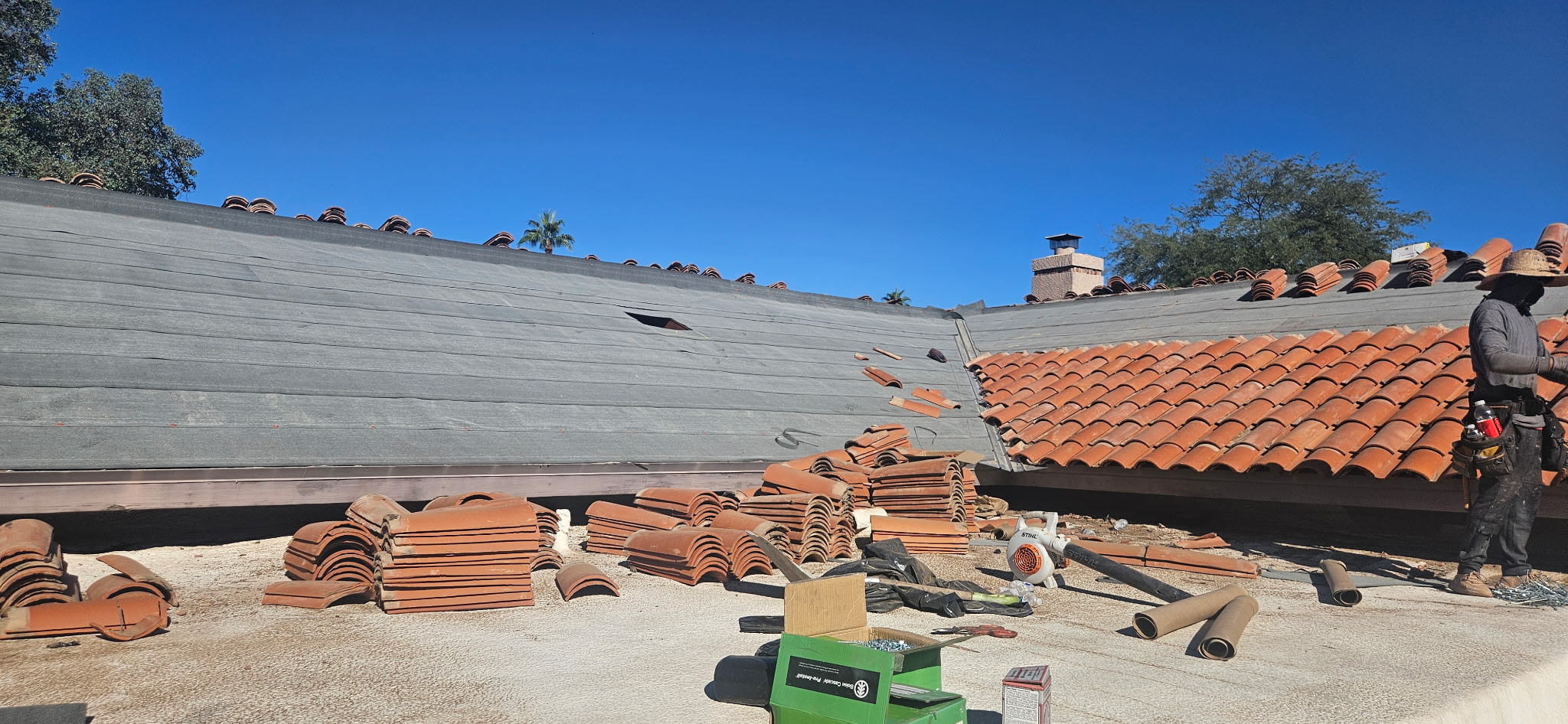
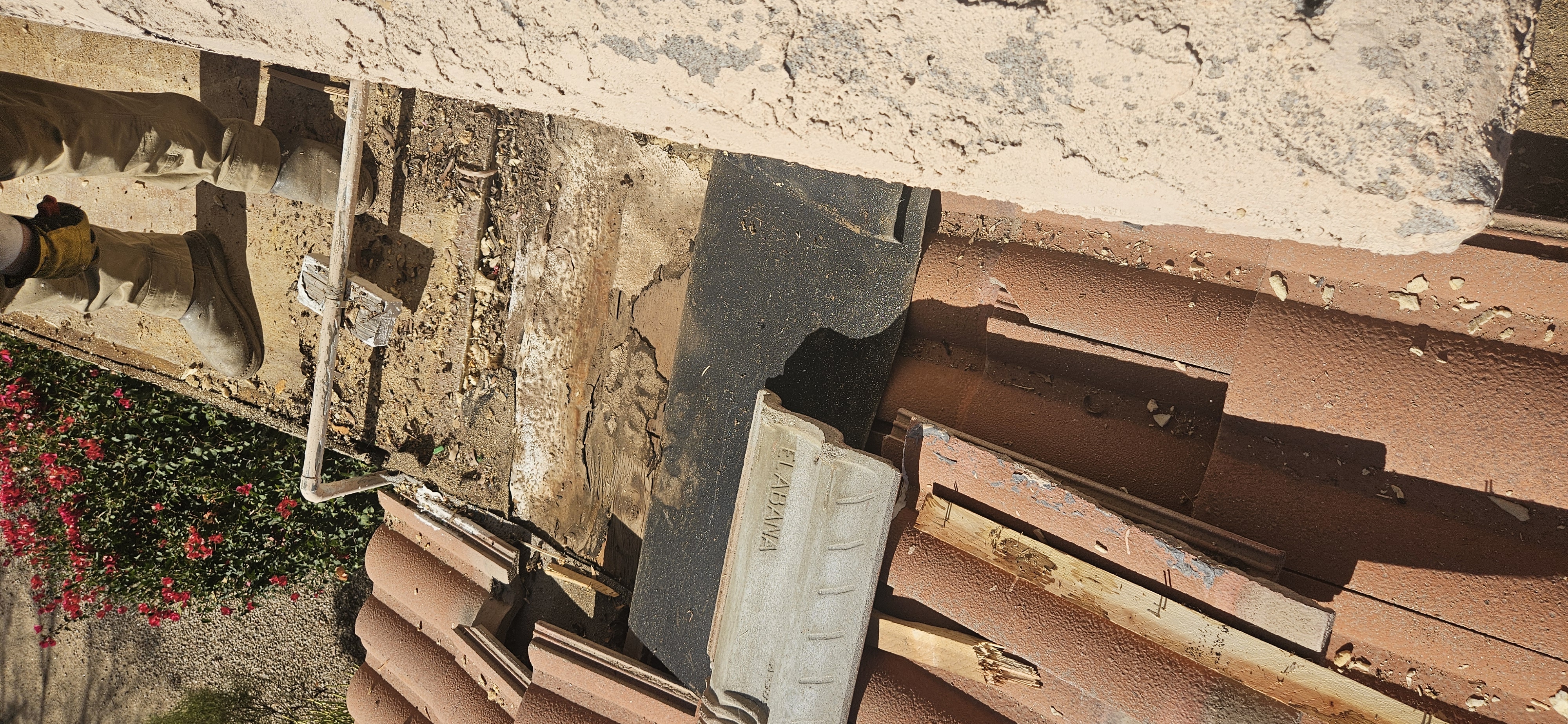
Tile presents a different challenge. The tiles may still look good while the underlayment underneath has become brittle, cracked, or curled from the Arizona heat. In that situation, replacing a few tiles will not solve the real problem. Tim notes that most tile-roof problems are underneath the tiles.
With shingles, the contractor should consider age, brittleness, missing shingles, curling, leak history, improperly sealed penetrations, and granule loss. When the shiny fiberglass mesh begins showing through, the shingles have experienced substantial surface wear.
These conditions are difficult to judge from the ground. The contractor should identify whether damage is isolated or part of a larger failure, then recommend a scope that matches that evidence.
“Sometimes the problem is underneath. Most times the problem is underneath the tiles.”
— Tim Forstie
What a Detailed Roofing Estimate Should Include
A good estimate should be detailed enough for the homeowner to understand exactly what will be done. It should identify the roof area involved, state whether the work is a repair or a full-roof project, list the materials, describe the preparation, give an expected timeframe, and note repairs required before the primary work begins. Those repairs could include rotten plywood or an AC curb that needs replacement.
For foam roofing, Tim looks for details about cleaning, repairs, foam thickness when new foam is being added, coating type, coating thickness, and coverage. The estimate should also address drains, scuppers, skylights, AC units, and other problem areas or potential future issues that should be corrected before the new system is installed.
A tile-roof estimate should explain the underlayment and flashing, the work planned in valleys, and what will be replaced or reused. If existing tiles will be removed and reset, it should state how broken tiles will be handled.
A line that says only “roof repair,” “roof coating,” or “new roof installation” beside a price is too vague. It leaves unanswered questions about the work and makes an accurate bid comparison difficult.
“The roofing is definitely in the detail work. The estimate should definitely reflect that. If the estimate is thin, the job may be thin as well.”
— Tim Forstie
Red Flags in Roofing Bids and Estimates
Vagueness is one of the biggest warning signs in an estimate. A bid that does not identify the materials or included work leaves too many loose ends. Other warning signs include an unexplained recommendation for a major project, unclear warranties, no mention of preparation, and no discussion of drainage or roof penetrations.
An unusually low price can also signal missing work. It may reflect less preparation, thinner foam, cheaper coating, fewer details, or a scope that does not solve the problem. That initial saving can lead to leaks, repeated repairs, or early roof failure.
Price matters, particularly when roofing work is expensive, but the better question is what the homeowner is receiving for that price. Compare the scopes, materials, preparation, warranties, and the companies responsible for the work—not only the totals at the bottom of the bids.
“The lowest bid can become the most expensive option if important steps are left out.”
— Tim Forstie
Questions to Ask a Foam Roofing Contractor
Before hiring someone for a foam roof, ask how much foam will be applied, which coating system will be used, how the roof will be prepared, and how existing or potential problem areas will be handled. Tim says Durafoam encounters many roofs with only half an inch of foam and warns that such a roof is going to fail.
Foam roofing is not simply a matter of spraying material. Preparation, foam thickness, applicator quality, coating, and drainage all matter. So do details around skylights, vents, scuppers, parapet walls, slopes, and AC units.
Experience should also include an understanding of long-term maintenance. Tim recently walked a foam roof Durafoam sprayed more than 30 years ago that remains in beautiful condition, but its coating has been maintained and its maintenance kept current. If a contractor does not explain recoating and future care, the homeowner is not receiving the full picture.
“Foam roofs are not just about spraying the foam. The prep work is what's most important, and the thickness of the foam is what matters.”
— Tim Forstie
Understand the Warranty and Future Maintenance
Ask what the warranty covers and what remains the homeowner’s responsibility. The word “warranty” does not necessarily mean that every form of damage is covered under every circumstance.
Roofs still require maintenance. Drains need to remain clear, coatings should be checked, and damage caused by birds, debris, or other trades may differ from a workmanship problem. Durafoam frequently sees clogged drains backing water onto roofs, along with bird damage and deterioration associated with a lack of routine checks.
Future recoating is especially important for foam roofs. Before hiring a contractor, ask how often the roof should be inspected, when recoating is expected, and which maintenance steps can help it last longer. A good contractor should be willing to explain these responsibilities before the project begins.
“A lot of people hear the word warranty and assume everything is covered no matter what. That's not always how it works.”
— Tim Forstie
Compare Roofing Bids by Scope, Not Just Price
When comparing two or three bids, first determine whether the contractors are solving the same problem. Check whether they propose the same materials, preparation, details, warranty duration, and warranty scope. Consider whether each contractor explained the inspection findings or simply handed over a number.
If one bid costs less, ask why. It may have a simpler but appropriate scope, or it may omit something important. The strongest choice is generally the contractor who gives the clearest explanation, presents the most complete scope, and recommends work that matches the roof’s actual condition.
“A good roofing decision should make sense, not just look cheap on paper.”
— Tim Forstie
Keep reading: Phoenix Roofing Costs · Free Roof Inspection
Frequently asked questions
- How do I know if a Phoenix roofer is qualified for my type of roof?
- Ask the roofer to explain your roof system, what is failing, and why the proposed repair or replacement is appropriate. This is particularly important on homes with more than one system, such as tile combined with a flat foam section.
- What details should I compare between roofing quotes?
- Compare materials, preparation, repair scope, project details, warranty coverage and duration, and the contractor’s explanation of the findings. If one price is lower, ask which work or materials differ.
- Can a roofer diagnose a leak by checking only the ceiling stain?
- No. Water can travel from skylights, AC units, drains, scuppers, walls, or flashing, so the contractor should inspect the entire roof before recommending work.
- How often does a foam roof in Arizona need to be recoated?
- Tim says foam roofs need recoating roughly every five years, though the contractor should inspect the roof and explain its specific maintenance schedule.
- Does a tile roof need replacement if the tiles still look good?
- The visible tiles may look fine while the underlayment beneath them has become brittle, cracked, or curled. A roof inspection is necessary because replacing a few tiles will not fix failing underlayment.
Reviewed by Durafoam Roofing Team.
Written by the Durafoam Roofing Team
Phoenix's trusted foam roofing specialists since 1989.