Foam Roof Pros and Cons: An Honest Guide for Phoenix Homeowners
Spray polyurethane foam (SPF) roofing is one of the most common low-slope roof systems on Phoenix homes, but it's also one of the most misunderstood. Since 1989, installing and repairing foam roofs across the Valley, we get the same question almost every week: "Is a foam roof actually worth it?"
Here is an honest, no-spin breakdown of foam roofing pros and cons so you can decide what makes sense for your home.
What is a foam roof?
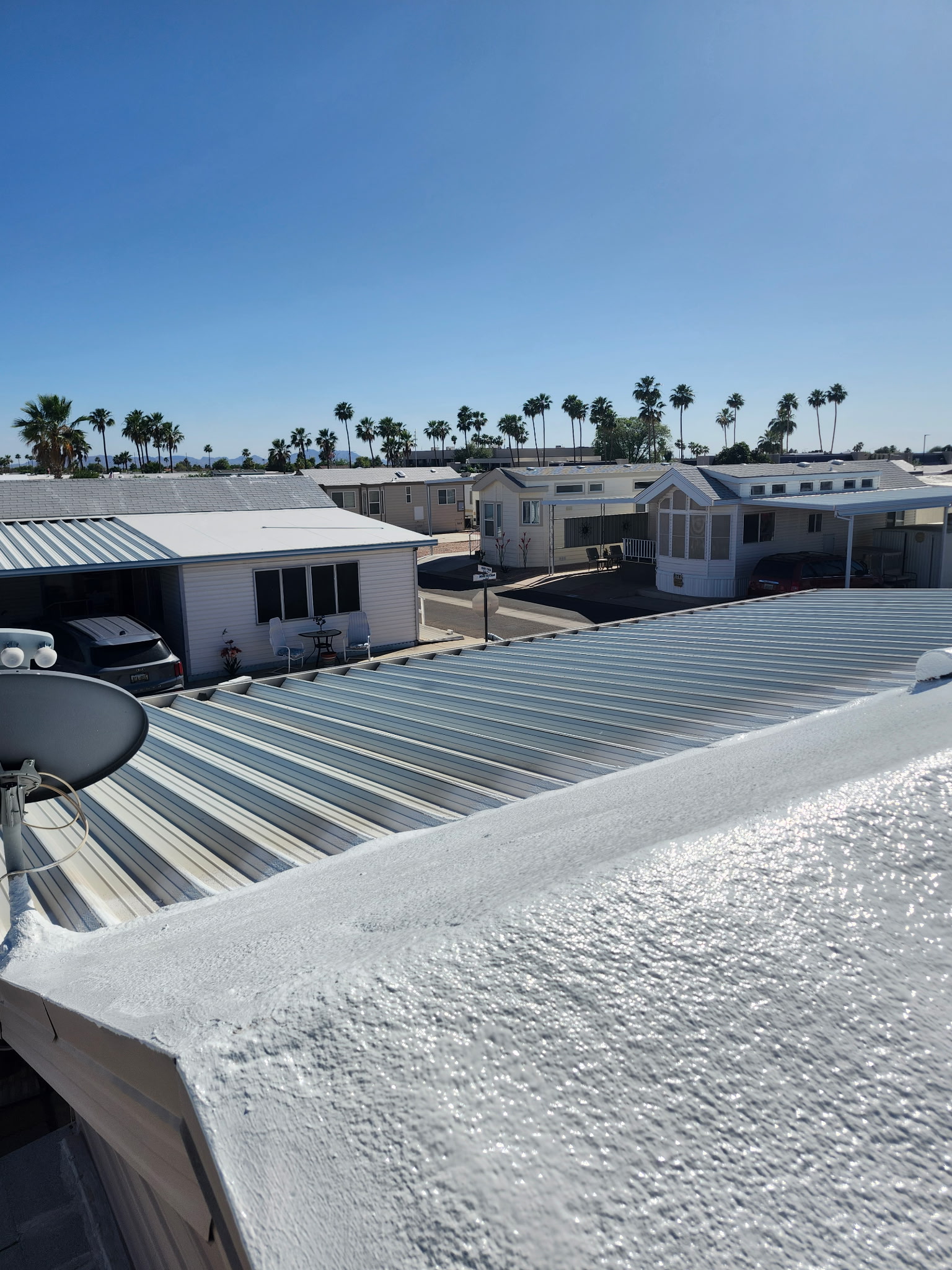
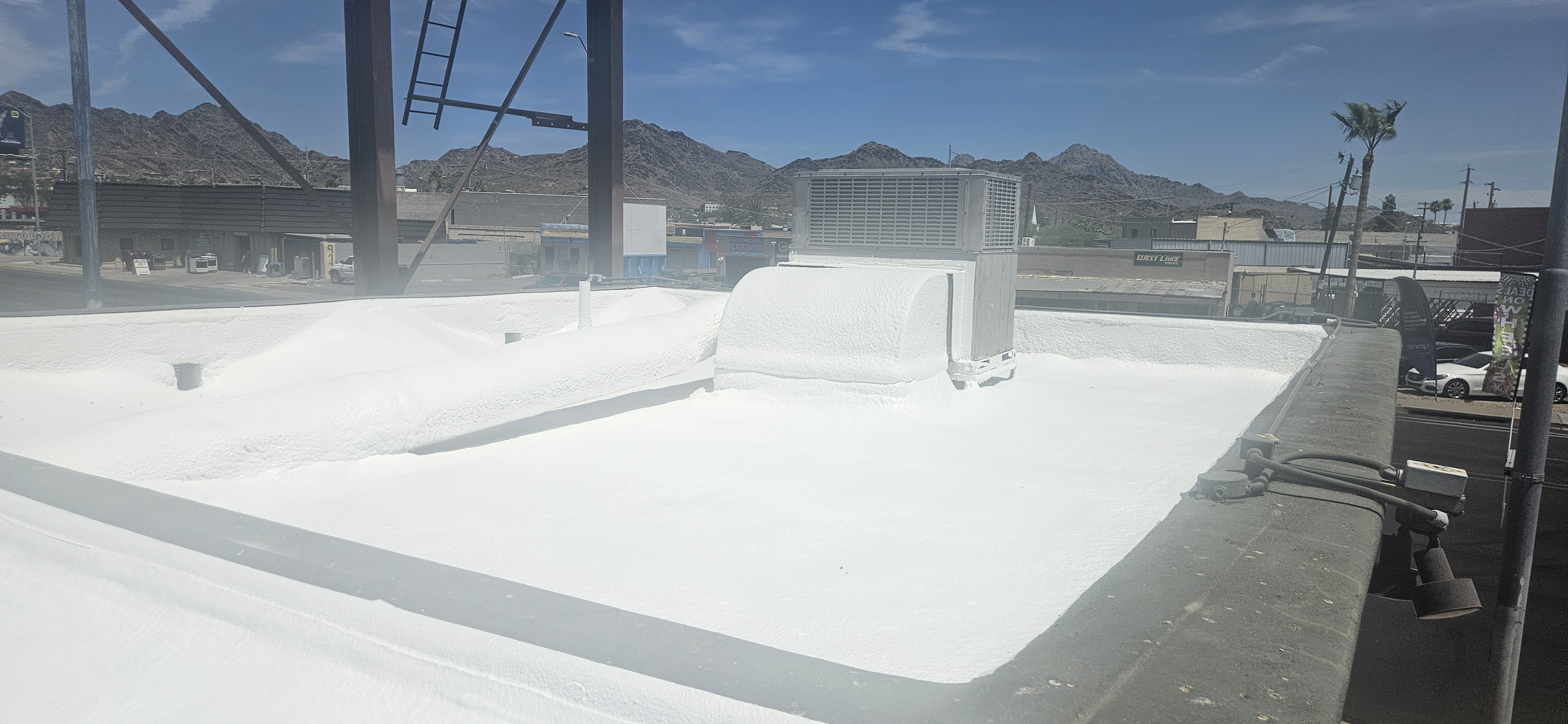
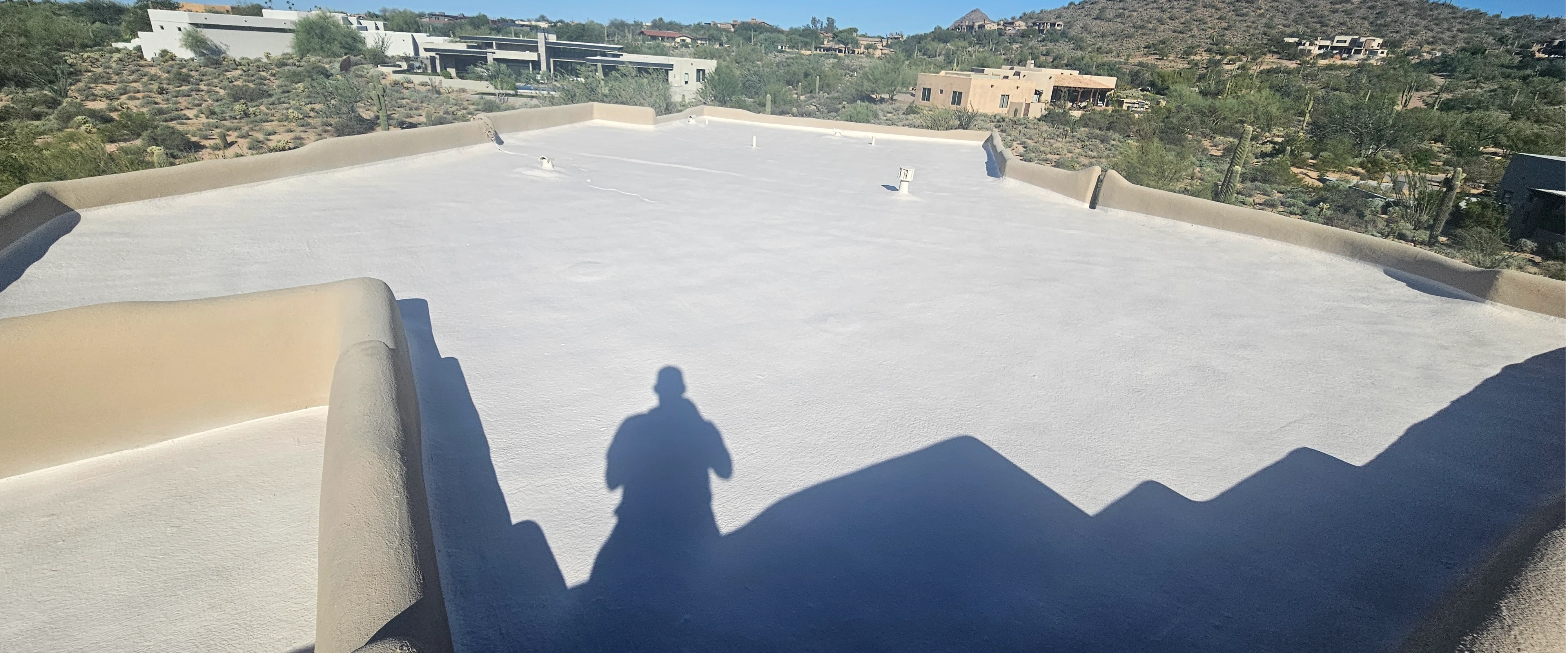
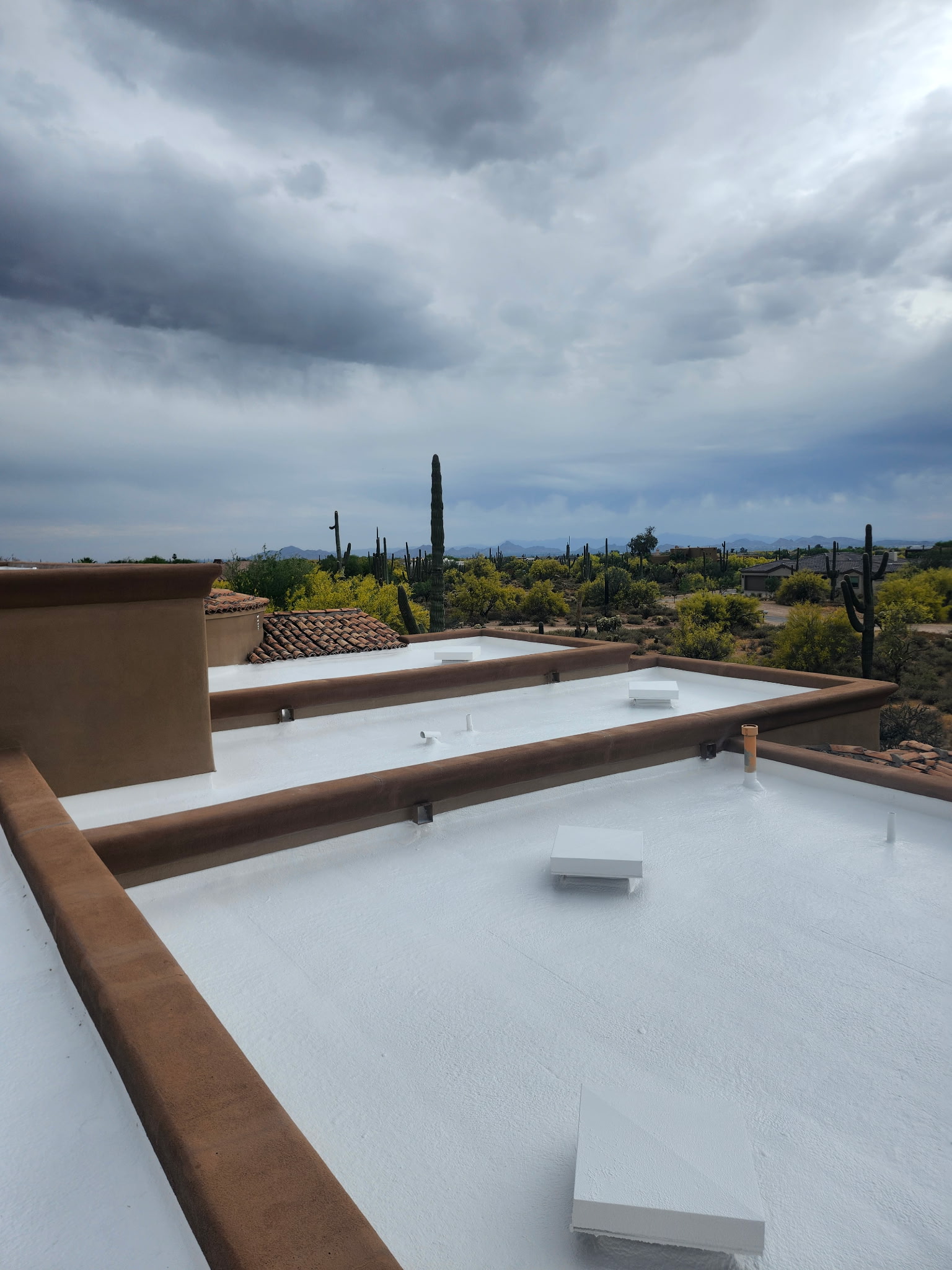
A foam roof is built by spraying two liquid chemicals onto your existing roof deck. They expand into a seamless layer of closed-cell polyurethane foam, typically 1 to 2 inches thick. A protective elastomeric coating (usually silicone or acrylic) is then applied on top to shield the foam from UV.
The pros of foam roofing
1. Seamless leak protection
Foam is sprayed as a single, continuous membrane — no seams, no fasteners, no laps. That eliminates the most common failure points on tile, shingle, and built-up roofs. For Phoenix homes with low-slope sections, parapet walls, or complicated penetrations, this is the biggest advantage.
2. Real energy savings
Foam has one of the highest R-values per inch of any roofing material (around R-6.5 per inch). Combined with a reflective white coating, a foam roof can drop attic temperatures by 20–30°F in summer. Most homeowners we work with see a noticeable drop in their APS or SRP cooling bill.
3. Lightweight and adds structural strength
A finished foam roof weighs roughly 50 cents per square foot — far less than tile or built-up systems. Once cured, the closed-cell foam actually adds rigidity to the roof deck.
4. Long lifespan when maintained
A properly installed and recoated foam roof can easily last 30+ years. The foam itself doesn''t wear out — it''s the top coating that needs renewal. We have foam roofs in Phoenix from the late 1980s that are still performing.
5. Installs over your existing roof
In most cases, foam can be applied directly over an existing roof, avoiding the cost, mess, and landfill impact of a full tear-off.
The cons of foam roofing (the honest part)
1. It requires recoating
This is the #1 thing homeowners aren''t told upfront. The foam is permanent, but the protective coating wears down under Arizona UV. Plan on recoating every 5-7 years. Skip it, and the sun will eventually chalk and degrade the foam itself. (See our foam roof coating and recoating page for what that actually costs.)
2. It can be punctured
Foam is soft compared to tile or metal. Dropped tools, A/C techs walking carelessly, hail, or tree branches can leave dents and small punctures. The fix is simple and cheap — but you need to catch it before water gets in.
3. Installation quality matters more than the material
A bad foam install is worse than no foam at all. Foam needs to be sprayed at the right temperature, humidity, and thickness. A crew that's rushing, spraying in wind, or skimping on coating thickness will leave you with a roof that fails in 5 years instead of 30. Always check licensing, references, and warranty terms.
4. UV exposure on the bare foam is a problem
If the top coating fails and the raw foam is exposed for too long, it chalks and breaks down. This is fixable if caught early, but it's why annual visual inspections matter.
5. Not ideal for steep-slope or visible roofs
Foam is best on flat or low-slope roofs. On a steep, visible pitch, you're usually better off with tile or shingles. Many Phoenix homes are a mix — tile on the visible front, foam on the flat back patio or addition.
6. Higher upfront cost than recoating an existing roof
A new foam roof costs more than a coating-only job, though typically less than a full tile or shingle replacement. Where it pays off is the seamless waterproofing and the energy savings over time.
Is a foam roof right for your Phoenix home?
Foam roofing is an excellent choice if:
Your home has a flat or low-slope roof
You're dealing with chronic leaks at seams, transitions, or parapet walls
Your cooling bills are higher than they should be
You're willing to budget for a recoat every 10–15 years
It's probably not the right call if you have a fully steep-slope tile or shingle roof in good condition, or if you're not going to keep up with routine maintenance.
Get an honest assessment
If you're weighing foam against other options, we'll come out and tell you straight whether foam makes sense for your specific roof — even if the answer is "don't replace it yet." Schedule a free roof inspection and we'll walk you through it.
Keep reading: Foam Roof Coating & Recoating · Foam Roof Recoating Cost
Written by the Durafoam Roofing Team
Phoenix's trusted foam roofing specialists since 1989.