5 Foam Roof Problems Phoenix Homeowners Should Never Ignore
Since 1989, our family at Durafoam Roofing has been keeping Phoenix homes dry under the Arizona sun. We asked our owner, Tim, to share his expert insights on the most common foam roof problems he sees while out on the job and how you can spot them before they turn into costly repairs.
What are the most common things that go wrong with spray foam roofs in Phoenix, especially older ones?
The most common things I see on older spray foam roofs are blistering, peeling off the substrate, and cracking along the seams. Since foam is sprayed on chemically and rises, it follows the pattern of what's underneath; if you see long vertical cracks coming through, that’s a likely leak point. I also look closely at the HVAC units to check how the elbows are attached, as peeling in those areas is a frequent source of leaks that we can usually fix fairly easily.
I'm seeing hairline cracks on my foam roof where the plywood seams are. Is that normal?
If I find a random crack that’s leaking, it's usually because it has popped through at a plywood seam. If you see that, you definitely want to give us a call to assess it and get it taken care of ASAP. You should also watch for cracking around scuppers where water drains off the roof; if water gets into those plywood seams, it won't just be a little drip—it will be a substantial amount of water inside your house.
My foam roof is cracking around the scuppers and drains. How serious is this?
Cracking around scuppers and drains isn't the most common issue, but it does happen and it's something you really need to watch out for. It is usually quite serious and not something you want to wait months to address. If you see cracking in your drainage areas, get someone out there or call us at 480-941-5373 immediately so we can get it fixed up for you.
How do leaves and debris from nearby trees impact my foam roof?
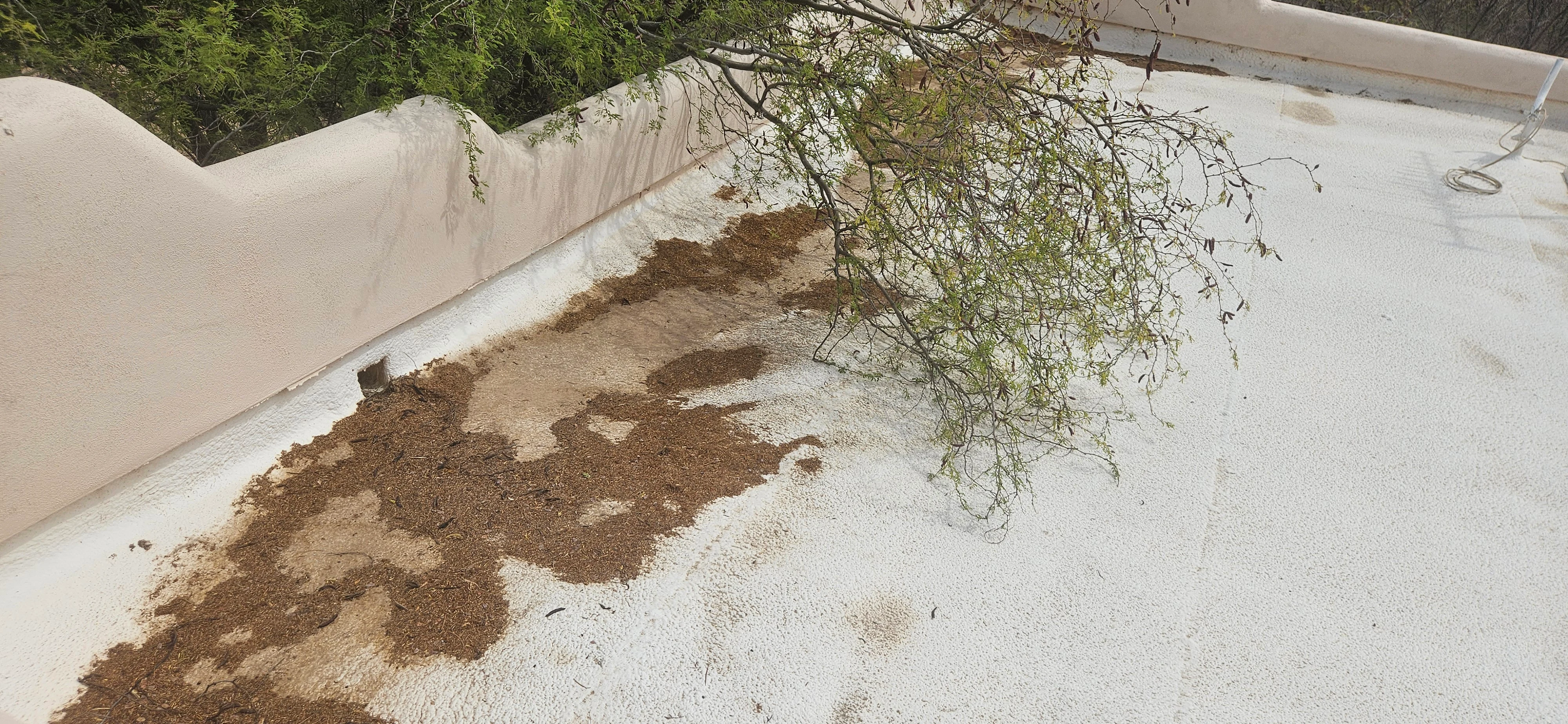
I was just on a roof this morning where the drains were backing up because the cover was catching leaves and nobody had cleaned them off. You definitely want to have someone blow or sweep the roof off at least every six months to a year if you have trees. Keeping those drainage outlets clear is vital because it doesn't take much to cause a dam, which sends water backing up into skylights, pipes, or other low points on the roof deck.
Is standing water after a monsoon a major problem for a foam roof?
During a heavy monsoon, seeing some standing water is generally not a problem. Foam manufacturers actually test their materials to ensure they can withstand water sitting continuously for 30 days before they even bring those products to market. Ponding is fairly common on a foam roof, and as long as it evaporates within a reasonable timeframe, it is generally nothing to worry about.
What causes blisters on a foam roof, and can they be fixed?
Blisters are usually caused by moisture being trapped underneath the foam during the initial application, like wet plywood or even a little sweat from the applicator. It can also happen if the foam was sprayed 'off ratio' or at the wrong temperature. While they aren't always an immediate emergency, if they split, they will cause leaks, so it's best to have us assess them—especially if they are everywhere, as that’s a sign the roof is simply getting old.
Water is overflowing around my skylights. Is this a roof failure?
It could be the roof, but it’s often a maintenance issue with the skylight itself. Every skylight has weep holes at the corners designed to let water drain off the glass and onto the roof. If water is overflowing, you likely have a clogged drain, debris in the weep holes that needs to be cleaned out, or a crack in the skylight itself that requires a replacement.
How often should I get my foam roof professionally inspected in Arizona?
If you haven't had your roof looked at in a few years, give us a call at 480-941-5373. On a brand-new roof, we usually suggest an inspection after two or three years, and then annually or biannually after that. Every roof is different, and our guys can tell you if you're safe to wait a while or if we should check back in a year to make sure everything is looking good.
What can I do as a homeowner to prevent common foam roof problems?
Beyond cleaning debris, you can walk the roof to look for bird holes, minor cracking, or loose seals around AC units, vent pipes, and T-tops. Make sure your scuppers feel nice and tight with no movement. If you see holes where birds have been pecking to get at a bug, you’ll want to fill those in; while bird holes typically don't leak immediately, it's better to stay ahead of them.
When is a foam roof problem too big to fix? When is it time for a replacement?
If you have blistering and cracking everywhere, or if your coating is gone and the roof looks 'burnt orange,' you are likely looking at a full tear-off and replacement. At that stage, it isn't worth just re-coating or patching a few spots. If the problems are widespread, more issues will keep coming, so it's much more cost-effective to just take it off and put a fresh one on.
Keep reading: Foam Roof Coating & Recoating · Foam Roof Recoating Cost
Written by Tim Forstie, Owner of Durafoam Roofing
Learn more about Tim — Phoenix foam roofing specialist since 1989.